

Intolerance Test | Natural Sensitivity Test
Glacier Peak Holistics · 17 Years · 95,000+ Tests Performed
Pet Intolerance Test for Dogs
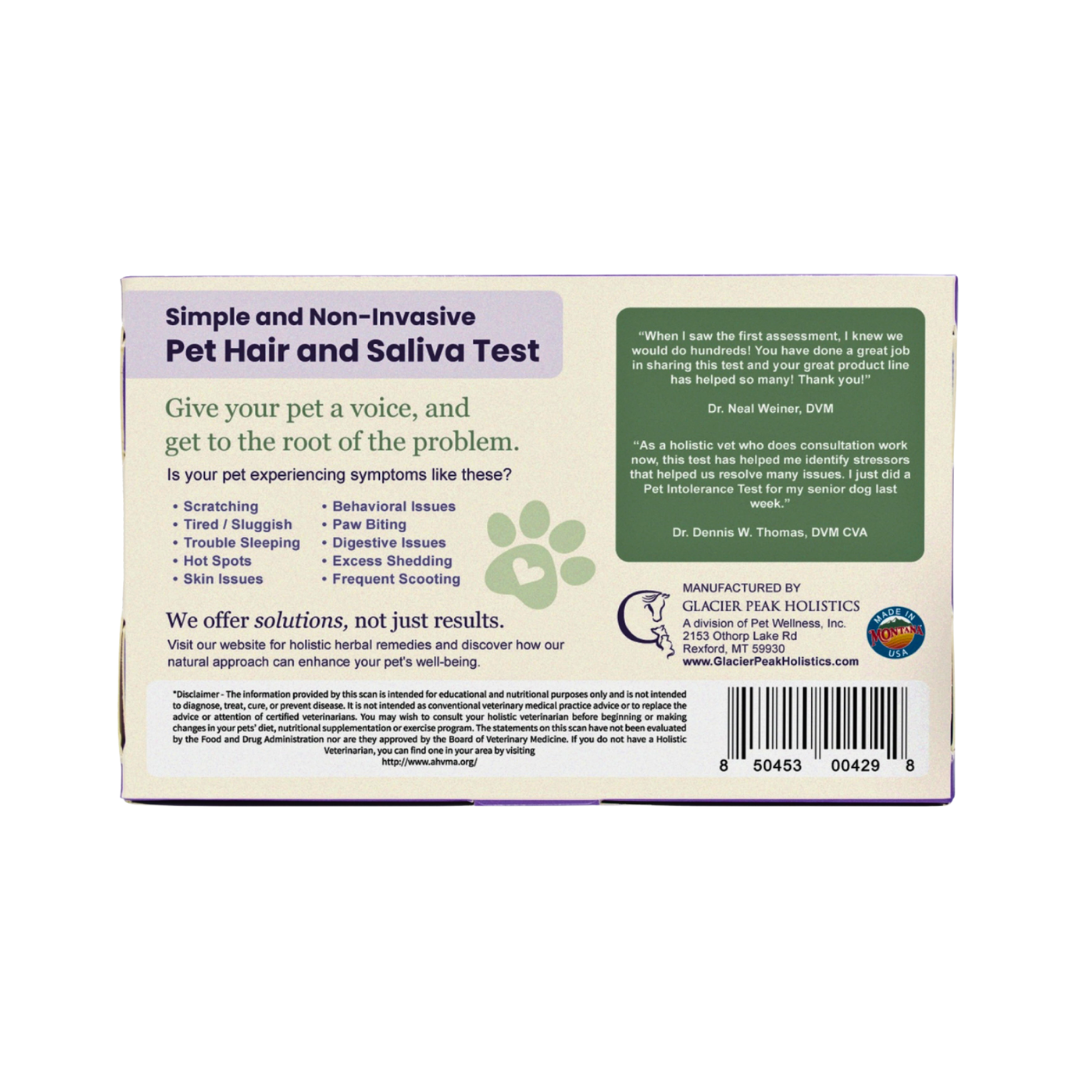
A 395-factor scan that identifies your pet's food and environmental sensitivities from hair and saliva samples you collect at home. The structured starting point for pet parents whose chronic itching, ear infections, paw licking, and digestive issues have not responded to anything else. Results delivered by email in 7 to 10 business days.
The Roadmap When Nothing Else Has Worked
Two years of itching. Three vet visits without answers. The $90 hydrolyzed bag that did not work. If this sounds familiar, you are who this test was built for.
If you have watched your dog scratch through the night, develop the same ear infection for the fourth time, lick their paws raw, refuse food they used to love, or break out in mystery hives, you already know what chronic sensitivity looks like in an animal who cannot explain themselves. You have probably been told "it is probably allergies" without anyone identifying which ones. You have probably tried an elimination diet that did not produce clear results because you were guessing at which proteins to remove. You have probably been offered Apoquel or Cytopoint or a prescription diet that costs more than your own groceries, and either it did not work or you are not comfortable with the long-term tradeoffs.
The Pet Intolerance Test gives you somewhere to start. Glacier Peak scans your pet's hair and saliva samples for 395 food and environmental factors that may be stressing the body, and returns a personalized report showing which substances scored highest for your specific pet. The categories are organized for action. The report becomes the foundation of a 60-day elimination diet protocol that pet parents actually use to identify their pet's triggers rather than continuing to guess at proteins.
Glacier Peak has performed over 95,000 of these scans across seventeen years. The 4.65-star rating across 520+ reviews on the manufacturer's site comes from pet parents whose dogs and cats had chronic unexplained symptoms (the itching, the ear infections, the paw licking, the digestive issues, the anxiety) and who finally found a structured place to begin. Dr. Dennis W. Thomas, DVM, a holistic veterinarian who has used bioresonance testing for many years in his integrative practice, provides ongoing professional endorsement of this specific test.
One honest note before you order, because it matters for your expectations. This test gives you a roadmap, not a verdict. The pet parents who follow through with the 60-day elimination diet work after receiving results tend to find meaningful answers. The pet parents who treat the report alone as the solution tend to be disappointed. The test was designed to point you toward where to investigate, and the dietary investigation is what delivers the real change. For the pet parent willing to do the work, this is often the missing piece they have been searching for.
What The Report Identifies
Three layers of sensitivity, all scanned in a single test
Food Sensitivities
Proteins (beef, chicken, lamb, salmon, duck, turkey, venison, rabbit), grains, vegetables, fruits, oils, legumes, dairy, supplements, treats, additives. The categories most pet parents need to address first, and the ones that conventional elimination diets ask you to guess at.
Environmental Sensitivities
Grasses and trees, weeds, flowers, pollens, dust, insects, household chemicals, petrochemicals, cleaning solvents. The triggers most pet parents do not think to investigate, and the reason some elimination diets fail despite removing every food.
A Plan You Can Act On
Sensitivities scored highest for your specific pet, organized by category for easy reference during the 60-day elimination phase. Next-step guidance for what to feed, what to remove, and when to reintroduce. The roadmap that turns the test into actual improvement.
What This Test Investigates
Six chronic patterns this test helps you understand, from mystery itch to failed elimination diets
Chronic Mystery Itching
The years-long scratching with no clear cause despite diet changes and topical treatments
Recurring Hot Spots
The skin flares that keep coming back no matter how many times the vet treats the surface
Persistent Ear Infections
The "allergies" the vet keeps treating without ever identifying what is actually triggering the cycle
Chronic GI Issues
Loose stool, gas, and digestive upset with no clear food trigger after months of careful tracking
Failed Elimination Diets
The careful single-protein protocols that should have worked but did not give you the answer
Hidden Environmental Triggers
The pollens, grasses, dust mites, and household items reacting alongside the food sensitivities
How The Test Works
Ten minutes at your kitchen table, then a personalized report in your inbox
Three things happen between ordering the kit and receiving your results. Here is what each one looks like.
Part 1 · What You Do
Ten minutes of sample collection at home. No drive to the vet. No needles. No stressed-out pet.
Why This Matters
No needles, no vet visit, no stress on your pet
You collect two samples at the kitchen table. Three organic cotton swabs in your pet's mouth gather saliva from the gums and tongue. A small amount of shedded hair (about the size of a quarter, from a clean unused brush or gently pulled loose, or cut from the rump or chest) goes in the same biohazard bag. The kit contains everything you need, including a prepaid return shipping envelope for US customers.
For hairless pets, the saliva alone is sufficient when the swabs are very wet. The whole process takes about ten minutes, including bagging and labeling.
For sensitive pets, this is the difference: conventional allergy testing usually requires a blood draw, intradermal injections, and often sedation. For pets who are already reactive at the vet, this can become its own trauma. Hair and saliva collection at home avoids all of that. The pet who panics in the waiting room can be tested at home, calm, while eating breakfast.
Part 2 · What Glacier Peak Does
Proprietary biofeedback analysis refined across 95,000 tests and seventeen years in Montana.
Your samples arrive at the Glacier Peak lab in Montana. The biofeedback analysis runs the hair and saliva across 395 test substances, measuring the subtle electromagnetic responses that the holistic veterinary tradition uses to identify substances stressing the body. The framework is different from conventional antibody testing: it looks for energetic patterns in your pet's own biological material rather than measuring specific immune antibodies in blood. For more on how this compares with conventional allergy testing, see the FAQ section below.
What matters here is that Glacier Peak has refined this protocol over 95,000 tests, and the test is endorsed by Dr. Dennis W. Thomas DVM CVA, who has used bioresonance testing in his integrative veterinary practice for many years. The clinical utility, defined as the test pointing pet parents toward dietary changes that produce visible improvement, is what the 4.65-star review average reflects.
Part 3 · What You Get
A personalized report organized by category, delivered to your inbox. The roadmap your elimination protocol is built on.
The Deliverable
Your personalized 395-factor sensitivity report
The report arrives by email within your chosen turnaround window (3 days for expedited, 7 to 10 days for standard). Substances are organized by category and scored on a sensitivity scale, with the highest-scoring items flagged for elimination during the first 60 days. Categories include the protein sources you have been rotating through, the supplements you have been adding, the grains you suspected, the cleaning products you use, the grasses in your yard, and many others your pet encounters daily.
This is the document that turns a vague "probably allergies" diagnosis into a structured plan. Where conventional elimination diets ask you to guess at which proteins to remove and then guess again if that does not work, the report points you at the specific top-scored items for your specific pet. You eliminate those, observe for two to four weeks, and then carefully reintroduce items one at a time to confirm or rule out specific triggers.
How to read the report well: treat the highest-scored items as the strongest hypotheses, not as a final verdict. The pet parents who use the report as a structured starting point for elimination and reintroduction tend to find meaningful answers. The pet parents who treat it as a diagnostic certificate without doing the dietary verification work tend to be disappointed. The test was built to point you toward where to investigate. The investigation is what produces the actual answers.
The Full Category Breakdown (395+ Factors Across 21 Categories)
Proteins: beef, chicken, lamb, salmon, duck, turkey, venison, rabbit
Fish: salmon, sardines, mackerel, herring
Poultry: chicken cuts, turkey, duck, quail, byproducts
Vegetables: carrots, peas, sweet potato, pumpkin, green beans, spinach
Fruits: apples, blueberries, bananas, others
Oils: coconut, fish, sunflower, flax
Grains: rice, oats, corn, wheat, barley
Legumes: peas, lentils, chickpeas
Nuts & Seeds: common pet food ingredients
Supplements: common supplement ingredients
Additives: preservatives, colorings
Medicinal Mushrooms: reishi, chaga, turkey tail, cordyceps
Spices & Herbs: culinary and medicinal
Dairy: for pets who consume it
Petrochemicals: plastics, cleaning solvents
Environmental Chemicals: common household toxins
Grasses & Trees: common outdoor species
Insects, Weeds & Flowers: including seasonal pollens
Dust: household and outdoor
Toxic Items: substances to keep out of the environment
Energetic Imbalances: underlying state of the body
What The Journey Looks Like
Six chapters between ordering the kit and a different pet six months later
For the pet parent who has been searching for a place to start, here is what the protocol actually looks like in real life. Pet parents tend to underestimate how much the journey matters compared to the test itself. The test is the first step. The 60 days of elimination is where the change happens. The reintroduction phase is where you finally know.
Week 1 · The samples
You collect saliva and hair at the kitchen table on a Saturday morning while your pet eats breakfast. Ten minutes, no needles, no anxiety. The prepaid envelope goes in the mail on Monday.
Week 2 · The report arrives
The email lands while you are at work. You open it on the train home. There are answers in the categories you suspected (chicken, salmon, rice) and surprises in the categories you would not have thought to investigate (dust, certain grasses, the cleaning product under the sink).
Weeks 3 to 4 · First signs of change
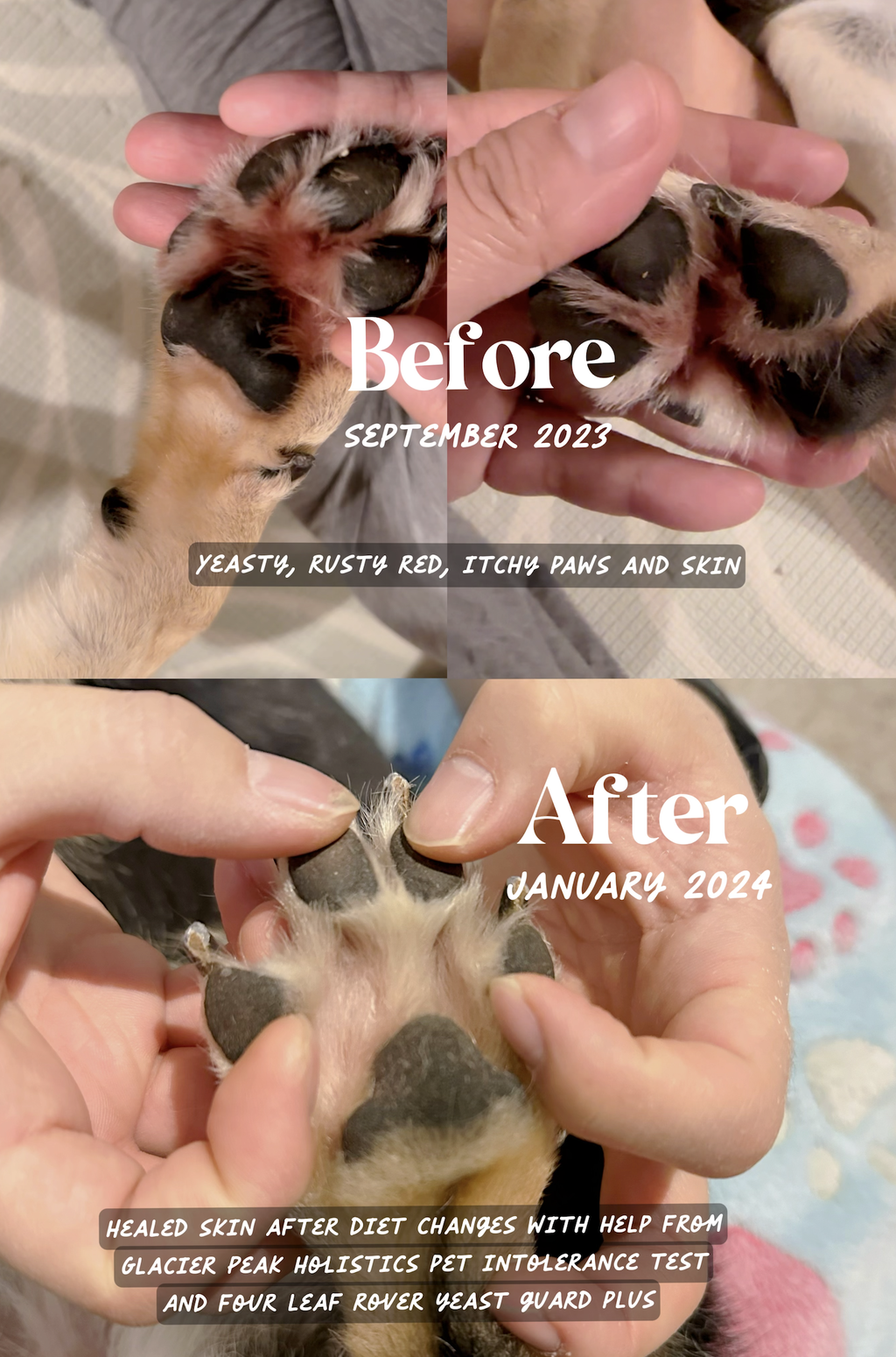
You have switched proteins, removed the top-scored items, swapped the cleaning product. By the end of the second week of elimination, you notice she is licking her paws less. By the fourth, the ear flare-up that was about to start did not. The energy is coming back.
Weeks 5 to 8 · The picture comes together
The coat starts looking better. The stools are firmer. The vet who saw her three months ago notices the change at her wellness check. She sleeps through the night without scratching. You realize you have not bought medicated shampoo in over a month.
Weeks 9 to 13 · Careful reintroduction confirms the triggers
You reintroduce one item at a time, waiting 5 to 7 days between each. Chicken comes back, and within four days the paw licking starts again. You have your answer, definitively, with observed cause and effect. You also confirm what she can tolerate, which gives you the rotation you can actually work with.
Month 6 · A different pet than the one who started
You can retest if you want to see how the sensitivity profile has shifted. Many pet parents are surprised at how much resolves once the gut heals and the immune system recalibrates. The dog or cat in front of you six months later is not the same one who started the protocol. The roadmap delivered.
Is This Right For Your Pet
This test is especially worth considering if your dog or cat...
Has chronic itching, paw licking, ear infections, or hot spots that have not resolved despite multiple veterinary interventions and you suspect food or environmental triggers you have not been able to identify.
Has been on an elimination diet without seeing clear results and you suspect you have been eliminating the wrong proteins or grains, or missing an environmental contributor.
Has chronic digestive issues (loose stools, gas, occasional vomiting, food refusal) that do not respond to commercial sensitive-stomach diets.
Has been diagnosed with "allergies" without a specific allergen identified, and conventional allergy medication has only suppressed the symptoms without resolving them.
Is on Apoquel, Cytopoint, or a prescription hydrolyzed diet and you would like to know what is actually driving the symptoms so you can work with your veterinarian on transitioning toward a more sustainable protocol.
Has chronic ear yeast, paw yeast, or "Frito feet" smell that you suspect is connected to dietary sensitivities driving the yeast overgrowth.
Is a fresh-fed or raw-fed pet whose owner wants to customize the diet based on individual tolerances rather than guessing at protein rotations.
Has been recently rescued or adopted, where you do not know the past dietary history and want to start with a clean slate of information.
Has unexplained behavioral patterns (anxiety, reactivity, sudden mood shifts) that you suspect may have an inflammatory or dietary component.
Belongs to a multi-pet household where you want to identify which specific pet has which specific sensitivities rather than blanket-eliminating ingredients across everyone.
Has a pet parent who is willing to do the elimination diet work that follows the test, including the careful 60-day elimination phase and the structured reintroduction protocol.
How To Use The Test
Pick your variant, follow the nine-step protocol
The kit arrives with everything you need: instruction booklet, registration card with a unique barcode, three organic cotton swabs, a biohazard bag, a return shipping bag, and prepaid return shipping for US customers.
Step 1: Choose Your Variant
Note: turnaround times do not include shipping time for your samples to reach the lab. US Standard typically arrives at the lab within 2 to 4 days of postage. International shipping varies by country.
Step 2: Register your test online. Go to gphtest.com and register using the unique barcode on the registration card. Complete the electronic registration. This step is mandatory. Tests cannot be processed without proper registration. Indicate whether the test is for a dog or a cat.
Step 3: Collect saliva samples. Carefully remove the three organic cotton swabs from the biohazard bag, only touching the end that will go in the bag, not the end that goes in your pet's mouth. Swab the gums and tongue with all three swabs at once or one at a time. The swabs should be visibly wet with saliva. Place them back in the biohazard bag with the wet ends at the bottom.
Step 4: Collect hair samples. Four options: use a clean unused brush to collect shedding hair (use a brush dedicated to this purpose, not contaminated by another pet or human), gently pull out a small amount of loose shedding hair (about the size of a quarter), cut hair from the rump or chest with clean unused scissors, or for hairless pets, ensure the saliva swabs are very wet. Place hair in the biohazard bag and close the zip.
Step 5: Ship the samples. Place the biohazard bag inside the return shipping bag (the prepaid return label is already attached for US customers). Save a copy of the tracking number. Drop off at your local post office or postal box. International customers should declare contents as "Exempt Animal Specimens," value the return sample at $1, and use postal services rather than FedEx, UPS, or DHL.
Step 6: Receive results. Results arrive via email within the turnaround window of your variant. The report is organized by category, with sensitivity scores for each item tested.
Step 7: This is where the answers come from. Eliminate the top-scored items from your pet's diet for 60 days. Replace eliminated proteins with novel proteins not previously fed. Eliminate or reduce identified environmental factors where possible. Observe your pet's symptoms throughout. Most improvement appears within the first 2 to 4 weeks. Document changes in itching, paw licking, ear health, digestive function, energy level, and mood.
Step 8: Reintroduce items carefully, one at a time. After 60 days of elimination, begin reintroducing items one at a time, waiting 5 to 7 days between each to observe for symptom return. This is how you confirm or rule out specific triggers identified by the test.
Step 9: Retest at 6 months (optional). After six months of elimination and healing, you can purchase a retest to see how the sensitivity profile has shifted. Many pet parents find that previously identified sensitivities have resolved as the gut and immune system have healed.
A Note On What Makes The Difference
Pet parents who follow through with the 60-day elimination and structured reintroduction tend to report the meaningful improvement that drives the 4.65-star rating. Pet parents who treat the report alone as the solution, without the dietary verification work, tend to be disappointed.
Multiple factors usually contribute to chronic symptoms. Gut health, immune function, environmental management, and overall wellness all influence whether dietary changes alone are sufficient. The test is one tool in a broader integrative approach, and the supplements below address the layers that pair well with the elimination protocol.
Conventional veterinary care remains important. This test does not replace veterinary diagnosis for symptoms with potential medical causes. Persistent or worsening symptoms warrant veterinary investigation.
Works Well With
The supplements that support the elimination protocol after results
The test identifies what may be stressing your pet's body. The next question is what to do once you have the results. Based on the patterns we see most commonly in test reports, here are the supplements that pair well with the elimination protocol that follows.
Same brand, designed to complement the test as a foundational daily formula. After eliminating identified sensitivities, Daily Defense provides the gentle daily detox, thyroid support, and whole-food nutritional foundation that supports the body's natural healing process. The Thorvin Kelp and herbal blend address the mineral and nutritional gaps that often accompany inflammatory states. Begin this on day one of your elimination protocol.
For pet parents whose test results show significant environmental chemical, petrochemical, or heavy metal sensitivities, Super Cleanse provides the targeted 2-week detox protocol. The clinoptilolite mineral binder selectively captures positively charged toxins (heavy metals, mycotoxins, ammonia) and removes them through the digestive tract. Run this protocol once during the first month of your elimination phase to clear accumulated environmental burden.
Most food intolerances are not really about the food itself. They are about the gut barrier, which has become permeable enough to allow food proteins to cross into circulation and trigger immune reactions that present as intolerances. ION supports the tight-junction structure of the gut wall, addressing the root cause that underlies most of what the test identifies. Add this throughout the elimination phase and beyond.
Healthy gut microbiome rebuilding is the other half of resolving food intolerances. Where ION addresses the gut barrier structure, Fido's Flora repopulates the canine-specific bacterial strains that maintain immune tolerance to foods. Use throughout the 60-day elimination phase and continue for 3 to 6 months afterward for full microbiome rebuilding.
Animal Essentials Seasonal Allergy Powder
For test results showing significant environmental sensitivities (grasses, trees, weeds, pollens, dust), this quercetin and herbal blend stabilizes mast cells and reduces the histamine response that drives environmental reactivity. Particularly valuable during seasonal peaks when environmental triggers are most active.
Frequently Asked Questions
The questions pet parents ask most
What does the Pet Intolerance Test actually test for?
The test scans for 395+ food and environmental factors across 21 categories: proteins, fish, poultry, vegetables, fruits, oils, grains, legumes, nuts and seeds, supplements, additives, medicinal mushrooms, spices and herbs, dairy, petrochemicals, environmental chemicals, grasses and trees, insects and pollens, dust, toxic substances, and what Glacier Peak calls energetic imbalances. The result is a personalized report showing which substances scored highest on the sensitivity scale for your specific pet, organized for action during the elimination phase.
How is this different from traditional veterinary allergy testing?
Conventional veterinary allergy testing typically uses one of two approaches: blood tests that measure specific allergy antibodies, or intradermal skin testing where small amounts of allergens are injected under the skin to observe reactions. Both measure the immune system's immediate hypersensitivity responses. The Pet Intolerance Test uses biofeedback technology to scan for energetic patterns in hair and saliva, identifying what Glacier Peak calls intolerances rather than allergies. The two approaches measure different things and may produce different lists of sensitivities. Neither is wrong; they are looking at different layers of the body's response to substances. Many pet parents who have done conventional testing without useful results find this test gives them the actionable starting point they did not get from antibody panels.
Is biofeedback testing scientifically validated?
This is a fair question pet parents deserve a direct answer to. Biofeedback and bioresonance testing have not been validated by mainstream veterinary research, and formal reproducibility studies have not consistently demonstrated the test characteristics that conventional laboratory testing aims for. The conventional scientific establishment treats this approach with skepticism. The holistic veterinary community, including practitioners like Dr. Dennis W. Thomas DVM CVA who endorses this specific test, has used bioresonance testing clinically for decades and finds it useful as part of a broader integrative protocol. The framework that produces consistently positive outcomes is to treat the results as a structured hypothesis for an elimination diet rather than a definitive diagnostic, and to verify identified sensitivities through observation during the elimination and reintroduction phases. Pet parents who use the test this way report the meaningful improvement that drives the 4.65-star average across 520+ reviews.
What do holistic vets recommend after getting test results?
The most common protocol that holistic veterinarians recommend involves a structured elimination diet for 60 days, eliminating the highest-scored items identified by the test. During this phase, the pet is fed novel proteins not previously consumed and free from the identified triggers. After 60 days, items are reintroduced one at a time over 5 to 7 day intervals, observing for symptom return. The combination of elimination plus careful reintroduction is what generates the actionable insight from the test. Holistic vets also typically recommend supporting gut healing, immune modulation, and detoxification during the elimination phase using formulas like the ones in the Works Well With section above.
How long does it take to get results?
Standard turnaround is 7 to 10 business days from the time Glacier Peak receives your samples. Expedited turnaround is 3 business days. These times do not include the postal shipping time for your samples to reach the lab, which is typically 2 to 4 days for US Standard mail. Results are delivered via email, so the report arrives immediately upon completion of analysis.
Can I test my puppy or kitten?
The test is suitable for pets over 6 months of age. The lower age limit exists because the immune system needs to mature before sensitivity patterns are stable enough to produce meaningful test results. For puppies and kittens under 6 months experiencing skin or digestive issues, conventional veterinary investigation is the appropriate first step.
Should I retest my pet?
Retesting is recommended after 6 months of following the elimination protocol. The 6-month window allows the body to heal from previously identified sensitivities, allows time for the immune system to recalibrate, and reveals whether new sensitivities have developed or whether previous ones have resolved. Many pet parents are surprised at how much the sensitivity profile can shift after 6 months of dietary and gut healing work. Retesting before 6 months tends to produce similar results to the first test, since the body has not had enough time to actually change.
What if my pet does not show improvement after eliminating identified items?
This happens, and there are several reasons it might. First, the test identifies sensitivities that may or may not be the primary drivers of your pet's symptoms. Symptoms can have multiple contributors, and resolving one without addressing others may not produce visible improvement on its own. Second, gut health, immune function, environmental management, and stress levels all influence whether dietary changes alone are sufficient. Third, some symptoms have medical causes that require conventional veterinary diagnosis. If you have done a thorough elimination and reintroduction protocol without seeing improvement, work with your holistic veterinarian on a broader investigation that may include conventional diagnostic testing alongside the intolerance test results.
The Quality Standards You Expect
For pet parents who have been searching for somewhere to start, this is often the missing piece.
If you have been watching your dog itch through the night, or your cat develop the same ear infection for the fourth time, or your pet refuse food they used to love, or break out in mystery hives, or pace and pant for reasons no test has explained, the Pet Intolerance Test gives you a structured place to begin. Glacier Peak performs the scan, returns the report, and points you at the specific items most likely to be stressing your pet's body. The 60-day elimination protocol that follows is where the real change happens, and pet parents who do that work tend to be the ones who finally find the answers they have been searching for.
395 factors scanned. 21 categories of food and environmental triggers. 95,000 tests of refinement behind the protocol. One personalized report that becomes the foundation of your pet's elimination diet.
The roadmap pet parents reach for when nothing else has worked.