

Omega-3 Pet Soft Gels | High-Quality + Sustainably Sourced Fish Oil
Nordic Naturals · Wild-Caught · Sustainably Harvested
Nordic Naturals Omega-3 Pet Soft Gels
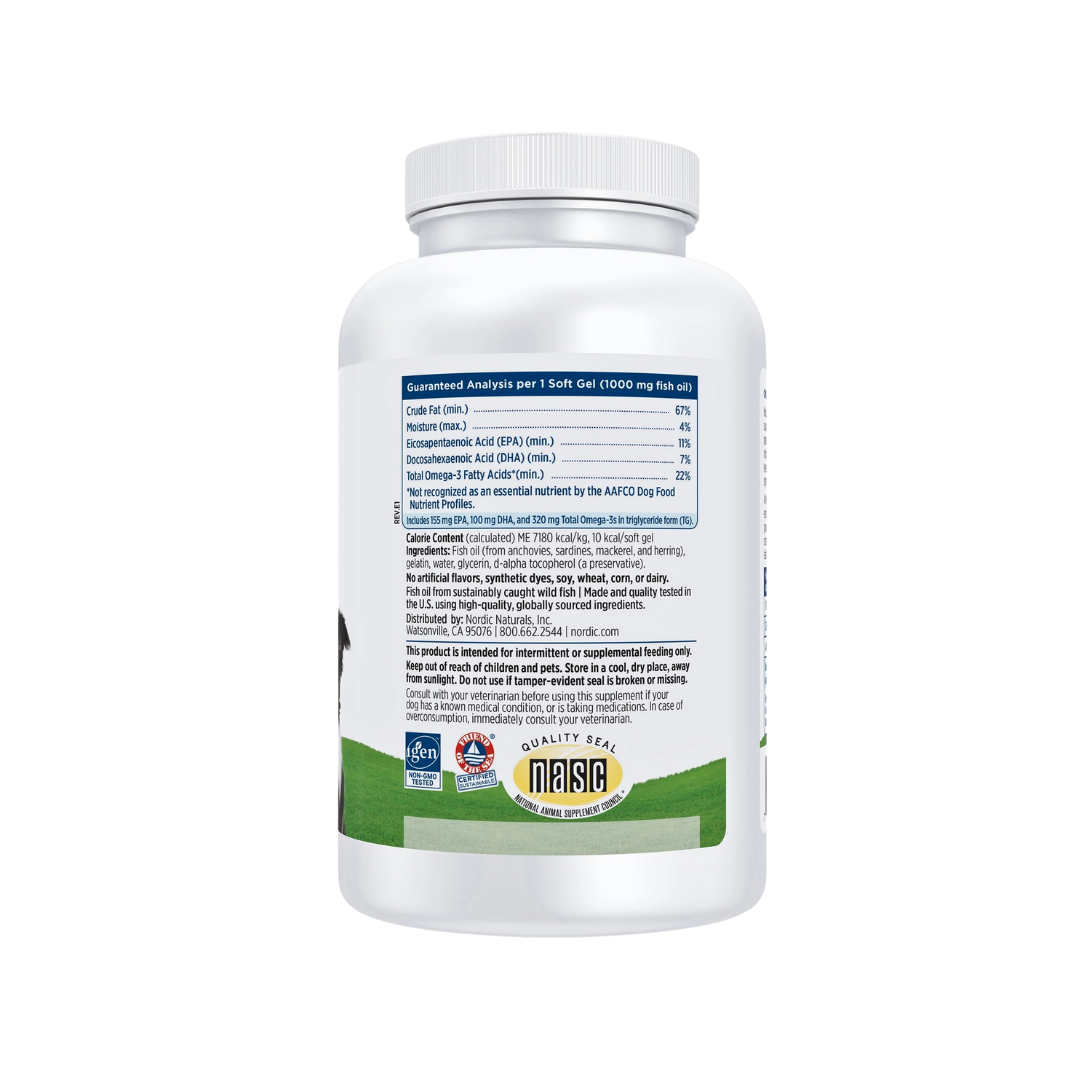
Natural triglyceride-form soft gel capsules from wild-caught anchovies and sardines harvested off the coast of Peru, the world's most sustainable fishery. 180 mg EPA and 120 mg DHA per soft gel. No rosemary oil. No artificial flavors. Third-party tested.
The Constellation Of Small Concerns You Have Been Tracking
The coat is duller than it used to be. The shedding is heavier. The hot spot keeps coming back. The vet says they are technically fine, but you watch and know something is incrementally off. If this sounds familiar, your dog's tissue chemistry has been running on the wrong fatty acid ratio for years.
You see it across so many of the dogs that arrive at our door. The constellation of small concerns no single vet visit has been able to fix. The dandruff that no medicated shampoo touches. The shedding the brush cannot keep up with. The recurring ear infections everyone calls "allergies." The slowness on the stairs in the morning. The senior dog whose engagement has quietly faded. You have read the labels. You have switched the food. You have probably tried fish oil before, the bottle from the grocery store or the chain pet store, and the changes you were promised never quite appeared. The dog is technically fine and yet not really right.
Modern commercial pet food has an inflammation problem hiding in plain sight. The ratio of omega-6 to omega-3 fatty acids in most kibble runs 20 to 1 or higher, while research suggests dogs do best closer to 5 to 1 or 10 to 1. That excess omega-6, sourced from the corn oil, soy oil, sunflower oil, and other vegetable oils that bind dry food together, drives the chronic low-grade inflammation that shows up as itchy skin, dull coat, recurring ear infections, stiff joints, and the slow loss of vitality you have been observing. Every veterinary nutritionist agrees on the answer: omega-3 supplementation corrects that ratio. The question was never whether to give omega-3. The question is which omega-3 actually delivers what the label promises.
Most pet fish oils on the shelf are ethyl ester (EE) form, the cheaper molecular structure produced when industrial processing breaks apart and reassembles the natural fish oil molecules. Triglyceride (TG) form, the natural shape EPA and DHA carry inside whole fish, is roughly 70% better absorbed by the body. The label can read 1500 mg of fish oil and still deliver less than half of that to the cells where the work needs to happen. The difference between budget fish oil and bioavailable fish oil is rarely about the dose on the bottle. It is about whether the cells ever receive the dose. This is the layer most fish oil shoppers do not know to ask about, and it is often the reason a previous fish oil did nothing visible.
Nordic Naturals Omega-3 Pet Soft Gels deliver the same natural triglyceride-form fish oil from wild-caught anchovies and sardines as the Nordic liquid line, packaged in individually portioned soft gel capsules for pet parents who prefer capsule dosing over a liquid bottle. The choice of source matters as much as the choice of form. Anchovies and sardines sit at the bottom of the food chain and live for two to four years, which keeps their heavy metal load (mercury, PCBs, dioxins) at a fraction of what salmon accumulates over its longer lifespan. The formula carries Friend of the Sea (FOS) certification, multiple industry awards including the Whole Foods Magazine Natural Choice Award, and the trust of label-reading pet parents whose dogs have spent years on cheaper fish oils without ever showing the changes the bottle promised. The 90-count bottle is sized for one to three month supply depending on your dog's weight.
Three Things Set This Apart From The Fish Oil You Replaced
A clean source, a bioavailable form, and a protected formula. All three matter.
Clean Source
Wild-caught anchovies and sardines from the most sustainable fishery in the world. Small forage fish at the bottom of the food chain carry a fraction of the heavy metals, PCBs, and dioxins that accumulate in farmed and wild salmon over a longer lifespan. Friend of the Sea certified for third-party verified sustainability.
Bioavailable Form
Triglyceride (TG) form, the natural shape EPA and DHA carry in whole fish. Roughly 70% better absorbed than the ethyl ester (EE) form that dominates the budget-priced fish oil shelf. The same printed EPA and DHA dose translates to substantially more usable omega-3 in the cells where the work happens.
Protected Formula
Natural vitamin E alone for preservation. No rosemary oil, which can lower the seizure threshold in epilepsy-prone dogs. No artificial flavors or synthetic additives. The soft gel capsule shell protects the fragile omega-3 from light and air exposure between doses.
What Omega-3 Pet Helps With
Eight everyday concerns this formula addresses, from skin and coat to brain and heart
Itchy Skin & Hot Spots
Chronic itching, dandruff, and recurring hot spots driven by inflammation
Dull Coat & Heavy Shedding
Coarse, brittle fur that lost its shine and shedding the brush cannot keep up with
Stiff Joints & Aging Mobility
Morning stiffness, stair hesitation, arthritis, and the reluctance to jump that was not there a year ago
Recurring Ear Issues
Ear infections everyone calls allergies that keep coming back no matter the treatment
Brain & Cognitive Support
Puppy brain development and senior cognitive sharpness, supported by DHA at the cellular level
Heart & Cardiovascular Health
DHA support for cardiovascular function, circulation, and aging heart health
Eye Health & Vision
DHA concentrates in retinal cells and supports vision through the aging process
Allergies & Inflammation
Environmental sensitivities, food reactions, and the chronic low-grade inflammation underneath them
The Full Formula
Two active ingredients in each soft gel. Years of decisions behind each one.
The full ingredient list is wild-caught anchovy and sardine oil plus natural vitamin E, encapsulated in a bovine gelatin soft gel shell. No second oil source. No filler oils. No flavoring inside the capsule. No preservative beyond the natural vitamin E. What the simplicity of the label conceals is the depth of the decisions behind it: which fish, which fishery, which molecular form, which preservative, which sustainability certification. Every choice was made to deliver what the label says it delivers, intact, to the cells where the work has to happen.
Featured Ingredient
Wild-Caught Anchovy and Sardine Oil from the South Pacific
Most fish oil on the pet shelf is sourced from salmon, and salmon is a problematic source for several reasons most brands prefer not to advertise. Salmon sits high on the marine food chain, which means it accumulates mercury, PCBs, dioxins, and other heavy metals across its long lifespan. The majority of commercial salmon is farmed, carrying additional concerns about feed contamination, antibiotics, and pen pollution. And the migration routes of Pacific salmon cross radiation plumes from the 2011 Fukushima disaster, a fact the broader fish oil industry has been quiet about.
Anchovies and sardines sit at the bottom of the food chain. They live for two to four years, feed almost exclusively on plankton, and reproduce in massive sustainable populations off the South Pacific coast of Peru, ranked the #1 most sustainable fishery in the world. The natural oil drawn from these small forage fish carries a fraction of the toxic load of salmon oil while delivering EPA and DHA at higher and more consistent concentration.
Think of anchovies and sardines as nature's cleanest delivery vehicle for omega-3. The fish themselves are short-lived, lower in environmental exposure, more sustainable to harvest, and naturally richer in the specific fatty acids your dog needs.
Third-party verified sustainability, not marketing. Nordic Naturals is Friend of the Sea (FOS) certified, which means the harvesting practices have been independently verified against sustainability standards rather than declared by the brand on the bottle. This matters because the broader fish oil industry has a long history of "sustainable" claims that fall apart under scrutiny. FOS certification is the standard that puts the verification in someone else's hands.
Featured Differentiator
Triglyceride (TG) Form, the Natural Shape EPA and DHA Carry in Whole Fish
This is the differentiator most pet parents have never been told about, and it is the single most important thing to understand when choosing a fish oil. When fish oil is processed industrially, the natural triglyceride structure (a fat molecule that holds three fatty acids on a glycerol backbone, which is how fish actually store omega-3 in their bodies) can be broken apart and reformed into ethyl ester (EE) form, which is cheaper to produce but harder for the body to absorb. Most pet fish oils on the broader market are ethyl ester. Nordic Naturals delivers triglyceride form (or re-esterified triglyceride form, the natural shape restored after extraction).
The difference is not theoretical. Studies show triglyceride-form fish oil is roughly 70% better absorbed than ethyl ester form. A pet parent giving 1500 mg of EE fish oil may be delivering less than 900 mg of usable omega-3 to the cells; a pet parent giving 1500 mg of TG fish oil is delivering closer to the full 1500 mg. The cheaper bottle, in other words, is rarely cheaper per actual dose delivered. The real math is price per mg absorbed, not price per mg printed on the label.
Think of the triglyceride form as the lock that matches the body's key. Ethyl ester form is a different shape, and the body has to do extra metabolic conversion work to use it, not all of which succeeds. TG form arrives ready to use.
The practical bonus most pet parents notice first: fewer fish burps and less fishy stool. The unabsorbed ethyl ester fraction is what causes the recurring fishy quality and the oily-stool complaints that come with cheap fish oil. With triglyceride form, less of the oil sits unprocessed in the digestive tract, which means the bottle behaves the way pet parents wanted it to all along.
EPA (Eicosapentaenoic Acid), 180 mg per Soft Gel
EPA is the omega-3 fatty acid that does the active anti-inflammatory work in the body. It incorporates into cell membranes throughout the body and competes with arachidonic acid (the inflammatory fatty acid that omega-6 fats produce) for the enzymes that build inflammatory signaling molecules. When EPA wins that competition, the resulting signals are less inflammatory or actively resolving. The chronic low-grade inflammation that drives so many canine conditions, including skin allergies, joint stiffness, recurring ear infections, and the general "something is off" presentation, begins quieting naturally over weeks of consistent supplementation.
EPA is particularly relevant for dogs with visible inflammatory issues. Itchy skin, recurring hot spots, dull coat, stiff joints, and the irritable presentation pet parents recognize but cannot quite name. EPA does not numb these symptoms. It corrects the underlying fatty acid imbalance that years of commercial diet exposure created.
Think of EPA as the firefighter on the inflammation crew. The body has been responding to immune triggers with the same inflammatory chemistry for years. Adding more EPA changes what the response truck has loaded in it. The chemicals it has access to put out fires faster and start smaller fires to begin with.
DHA (Docosahexaenoic Acid), 120 mg per Soft Gel
DHA is the structural omega-3, the natural building material that cell membranes use throughout the body. It is especially concentrated in brain tissue, retinal cells, and the synapses (the connection points between nerve cells where neurological signals get passed). For young dogs, DHA supports brain development, learning capacity, and cognitive function during the critical developmental window. For senior dogs, DHA supports the maintenance of neural tissue against age-related decline, and a growing body of research suggests omega-3 supplementation may slow the progression of canine cognitive dysfunction syndrome (the dog version of dementia).
DHA also supports cardiovascular function, retinal health, and the elasticity of cell membranes throughout the body. Where EPA does the active anti-inflammatory work, DHA does the structural maintenance work. Both are necessary for the full omega-3 benefit, and the natural ratio of EPA to DHA in this formula (roughly 1.5 to 1) reflects the slightly anti-inflammatory-leaning composition that veterinary research supports for dogs.
Think of DHA as the construction material the body uses to build and maintain cell membranes. Cells with adequate DHA work better. They communicate more effectively, age more slowly, and resist the cumulative damage that drives the visible signs of aging in dogs.
Natural Vitamin E (d-Alpha Tocopherol)
The single inactive ingredient inside each soft gel is d-alpha tocopherol, the natural form of vitamin E, used at trace levels as a natural preservative. Fish oil is fragile by nature, and the omega-3 molecules begin to oxidize on contact with air and light. Vitamin E protects them inside the soft gel shell and supports the same protection inside the body once the oil reaches the bloodstream, where it functions as a continuing antioxidant for the omega-3 already in circulation. Think of vitamin E as the bodyguard for the fragile omega-3 molecules. Without it, the oil oxidizes and loses potency before the cells can use it.
One ingredient deliberately absent. Most pet fish oils include rosemary oil as a secondary natural preservative, and rosemary has antioxidant benefits at low doses. However, rosemary oil can lower the seizure threshold in dogs prone to epilepsy, and at higher cumulative doses it can irritate sensitive digestive systems. Nordic deliberately excludes rosemary oil, using vitamin E alone for preservation. This is a small choice with a real consequence: the formula is safer for seizure-prone, pregnant, and digestively sensitive pets, and Nordic accepts the small loss of shelf-life flexibility in exchange.
Why This Is The Highest Quality Fish Oil On The Market
Independently tested every batch for purity, potency, heavy metals, rancidity, freshness, PCBs, and dioxins. The Certificates of Analysis are published openly.
Most pet fish oils make purity claims on the label. Few publish the actual testing data. Nordic Naturals sends every production batch to independent third-party laboratories for the parameters that determine whether a fish oil is pure, potent, and fresh as labeled. The Certificate of Analysis (the lab report documenting the actual measured values) for any production lot is publicly available on the manufacturer's site, which is the transparency standard the holistic supplement industry has been moving toward but few brands have actually adopted. The label claims are not marketing. They are independently verified data points you can read for yourself.
This is the highest quality fish oil sold in the pet supplement category. Wild-caught anchovy and sardine from sustainable fisheries. Triglyceride form for roughly 70% better absorption than the cheaper ethyl ester form. Independent third-party testing every batch for the seven contamination and freshness parameters that distinguish a clinical-grade fish oil from a commercial one. Publicly available Certificates of Analysis. Sealed soft gel encapsulation that protects the oil from air and light through the entire shelf life. The same human-grade purity standards Nordic applies to its consumer fish oil line, applied unchanged to the pet line.
Potency
EPA and DHA levels measured against the label claim. The actual values are published rather than letting the label speak for itself.
Heavy Metals
Mercury, lead, arsenic, and cadmium tested to confirm levels well below safety thresholds. Cold-water fish accumulate marine pollutants, and testing is the only way to know what is in the bottle.
Rancidity
Peroxide and anisidine values verify the oil has not oxidized during processing. Rancid fish oil loses its omega-3 benefit and actively damages cells through oxidative stress.
Freshness (TOTOX)
Total oxidation values measured to confirm the oil reaches the bottle at peak freshness. Most pet fish oils oxidize before delivery and quietly lose potency on the shelf.
PCBs
Polychlorinated biphenyls (industrial contaminants that accumulate in marine food chains) tested every batch and confirmed below the most stringent international purity standards.
Dioxins
Persistent organic pollutants that accumulate in fish tissues from ocean contamination. Tested every batch and confirmed below safety thresholds before any oil leaves the facility.
And The Capsule Preserves What The Testing Verified
Each soft gel is its own sealed protective container for the oil inside
Light and air are the two most destructive forces on omega-3 fatty acids. UV exposure breaks the fragile fatty acid chains, and oxygen exposure creates the rancid peroxide compounds that turn a clean fish oil into one that damages cells through oxidative stress. Liquid fish oils in opened bottles are exposed to fresh air every time the lid comes off, and the cumulative oxidation builds over the weeks the bottle sits in use.
The soft gel format solves this. Each capsule seals the oil inside an amber-colored shell that blocks UV light and prevents any air contact until the capsule dissolves in the digestive tract. The oil never touches air or light from the moment it leaves the nitrogen-protected processing facility through the moment your dog ingests it. Combined with the third-party testing that verified freshness before encapsulation, this is the most controlled delivery format the fish oil industry has developed. The dog gets the same fresh oil from the first capsule in the bottle as from the last.
What This Looks Like Inside Your Dog's Body
Eight things happen between starting the bottle and the coat that used to be dull being shiny again
Imagine a dog whose owner has been quietly tracking a constellation of small concerns. The coat is duller than it used to be. The shedding is heavier. There is an occasional hot spot, a recurring ear that needs cleaning, a hesitation on the stairs in the mornings, a slowness to greet visitors at the door. The vet has not flagged anything as a problem. The dog is technically "fine." But the owner watches and knows something is incrementally off. In most cases, the missing factor is not a medication or a diagnosis. It is the chronic omega-6 surplus that modern commercial food has built into the dog's tissue chemistry over months and years. Here is what changes once Nordic Naturals Omega-3 Pet is added to the daily routine.
EPA incorporates into cell membranes throughout the body
The fatty acid that does the active anti-inflammatory work begins competing with arachidonic acid for the enzymes that build inflammatory signaling molecules. The body's inflammatory chemistry begins shifting from the moment the first dose is absorbed.
The inflammatory signals the body produces become gentler over four to eight weeks
As EPA replaces omega-6 fats in cell membrane structure, the signaling molecules produced by those cells become less inflammatory and more actively resolving. The chronic low-grade inflammation that has been driving the visible symptoms begins quieting.
DHA naturally integrates into brain, retinal, and synaptic cell membranes
The structural omega-3 your dog's neurological tissue needs gets restored to the cell membranes that commercial food consistently leaves underbuilt. Brain, eye, and nerve tissue gets the construction material it was supposed to have all along.
The omega-6 to omega-3 ratio in the tissues shifts toward the healthier range
The inflammatory 20-to-1 baseline that commercial food creates begins moving toward the 5-to-1 to 10-to-1 ratio that veterinary research supports. The body has the raw material it was designed to use rather than the surplus it had been forced to compensate for.
Skin and coat changes appear first
Less itching. Less dandruff. Brighter coat. Reduced shedding. The hot spots stop coming back. These are the visible downstream signs of the upstream cellular work, and they are the changes pet parents notice first.
Joint comfort improves over weeks
As joint inflammation decreases, the stiff mornings shorten. The stair hesitation eases. Movement looks more natural again. The dog who had been slowing down begins moving like a slightly younger version of themselves.
Cognitive sharpness in senior dogs improves over months
Eyes look brighter. Engagement returns. The general dullness of cumulative inflammation reverses. The senior dog whose attention had been drifting starts noticing the world again.
The constellation of small concerns reorganizes into a dog that is visibly well
The dog's tissue chemistry, no longer running on the inflammatory baseline of commercial food alone, has the natural raw material it was designed to use. This is the moment most pet parents describe when they write the reviews that built Nordic's reputation as the gold standard fish oil.
Important Notes Before Starting
Pause fish oil 7 to 10 days before any surgery. Omega-3 at therapeutic doses can have mild blood-thinning effects, which is the standard reason veterinary surgeons recommend a temporary pause before scheduled procedures. Resume after your veterinarian clears it post-operatively. Inform your veterinary team about all supplements before any scheduled surgery.
Store in a cool, dry place out of direct sunlight. The soft gel shell protects the omega-3 from light and air between doses, but heat and humidity still degrade fish oil over time. Refrigeration is not required for soft gels (unlike the liquid form), but a cool kitchen cupboard away from the stove or dishwasher heat is ideal. Use by the expiration date printed on the bottle.
Is This Right For Your Dog
Nordic Naturals Omega-3 Pet Soft Gels are especially worth considering if your dog...
Has chronic skin issues, recurring hot spots, dandruff, or heavy shedding the vet has been calling "seasonal allergies" for years without ever resolving the underlying cause.
Refuses liquid supplements or makes a mess of every dose, and you want capsule-based dosing that goes down with a treat or hides easily inside food.
Has tried other fish oils that produced fish burps, oily stool, or no visible improvement after months of consistent use, and you are ready to try the triglyceride form your previous bottles probably were not.
Has a dull, dry, brittle, or rough coat despite a high-quality fresh or commercial diet.
Shows joint stiffness on cold mornings, slower stair climbs, or hesitation before jumping on or off the couch.
Is a senior dog showing early signs of cognitive change: confusion, sleep disruption, reduced engagement, or generally "off" behavior the vet has not yet labeled.
Has been diagnosed with arthritis, hip dysplasia, or other joint conditions where omega-3 is the first-tier natural nutrient intervention.
Eats commercial kibble (which is most dogs) and is therefore exposed to the omega-6 surplus that creates the inflammatory baseline you have been trying to fix downstream.
Travels frequently with you, where capsule-based dosing avoids the mess and refrigeration concerns of a liquid bottle on the road.
Is on a fresh-food, raw, or homemade diet that needs supplemental EPA and DHA to round out the fatty acid profile.
Is prone to seizures, where rosemary-containing fish oils are contraindicated, and you need a natural fish oil that excludes rosemary by design.
Belongs to a label-reading, holistic-leaning pet parent who wants third-party-tested, sustainably sourced, triglyceride-form fish oil rather than the unverified shelf-brand option.
How To Give It
One to five soft gels daily, by your dog's weight
Most dogs accept the soft gels readily, either swallowed whole with a treat or pill pocket, or with the capsule punctured and the oil squeezed onto food. The capsule format makes dosing precise without measuring spoons, and the soft gel shell keeps the oil contained until your dog ingests it.
Weight-Based Soft Gel Dosing
Split the dose if your dog eats twice daily. The total daily dose can be given in one portion or split between morning and evening meals. Whatever fits your routine.
Three ways to give the soft gel. First, swallowed whole, hidden inside a soft treat, pill pocket, or small piece of cheese. Second, given like a pill to dogs who accept direct administration, by placing the soft gel at the back of the tongue and gently closing the mouth. Third, by puncturing the soft gel with a pin or scissors and squeezing the oil directly onto food. The third method is helpful for very small dogs who cannot swallow the capsule whole, and for dogs whose owners want to verify the oil is actually going down.
Storage is simple. Keep the bottle in a cool, dry place out of direct sunlight. Refrigeration is not required (this is one of the format advantages over the liquid version). The soft gel shell protects the oil from oxidation between doses. Use by the expiration date printed on the bottle.
What The First Six Months Look Like
Weeks 1 to 2 · The cellular work begins
Most pets show no visible change yet. EPA and DHA are still incorporating into cell membranes throughout the body. The mechanism work is happening before the visible signs show up.
Weeks 4 to 8 · Skin and coat improvements appear
Less itching. Less dandruff. A brighter coat. Reduced shedding. The hot spots stop coming back. The visible downstream signs of the cellular work begin showing up across the skin and coat.
Weeks 6 to 12 · Joint comfort improvements appear
Easier rising in the morning. Less stair hesitation. More natural movement. The cumulative anti-inflammatory work reaches the joint capsules and connective tissue.
Months 3 to 6 · The deepest changes
Cognitive sharpness in senior dogs. Eye clarity. Deeper systemic anti-inflammatory benefits. The compound effect of months of consistent membrane-level work shows up across multiple systems at once. This is the window most pet parents describe when they say the dog is finally back to themselves.
Works Well With
The natural partners that complete the holistic anti-inflammatory foundation
Omega-3 is the foundation. Here is what stacks well on top of it for specific situations, in the order most pet parents tend to add them.
The textbook omega-3 partner. Curcumin, the natural anti-inflammatory polyphenol in turmeric, has notoriously low absorption on its own, but the fat in fish oil dramatically improves it. CurcuVET uses a phytosome formulation (a fat-bound version of curcumin engineered for much higher absorption than standard turmeric) with soy-free sunflower phospholipids (the fat-based building blocks of cell membranes) that further amplifies absorption. Omega-3 and phytosome curcumin operate on different anti-inflammatory pathways, which makes them truly synergistic rather than redundant.
Omega-3 reduces joint inflammation through fatty acid pathways. Jope's UC-II undenatured collagen retrains the immune system to stop attacking joint cartilage. Two completely different mechanisms targeting the same joint outcome. For dogs with arthritis, hip dysplasia, or aging joint issues, this is the holistic dual-mechanism approach that conventional single-ingredient supplements cannot match.
Inflapotion Powder (Glacier Peak)
Omega-3 modulates inflammatory chemistry through cell membrane incorporation. Inflapotion adds marshmallow root, slippery elm, comfrey leaf, and other herbal anti-inflammatory mechanisms that operate through completely different pathways. For dogs with significant systemic inflammation (chronic allergies, autoimmune conditions, multi-site joint issues), layering fatty-acid and herbal anti-inflammatories produces more durable results than maxing the dose of either alone.
Fat-soluble nutrient absorption is gut-dependent. A healthy, species-appropriate microbiome (the community of beneficial bacteria living in your dog's digestive tract) improves omega-3 incorporation into tissues and supports the broader anti-inflammatory cascade omega-3 is trying to trigger. Fido's Flora uses dog-specific bacterial strains rather than the yogurt-style human strains that often pass through canine digestion without taking hold. Foundational pairing for dogs with concurrent gut and skin issues.
Wholistic Pet Organics Ester C Immune Boost
Vitamin C reinforces the antioxidant work the natural vitamin E in the fish oil is already doing, protecting omega-3 molecules from oxidation in circulation. Ester C is the gentler buffered form that does not irritate sensitive digestive systems, and it adds immune support through a completely complementary mechanism. Particularly useful for senior dogs and dogs whose inflammatory load comes with seasonal or environmental allergies.
Frequently Asked Questions
The questions pet parents ask most
Should I choose the soft gels or the liquid version?
Both contain identical wild-caught anchovy and sardine oil in the same triglyceride form. The choice comes down to administration preference. Soft gels are easier for dogs who refuse oils on food, simpler for travel, do not require refrigeration, and deliver precise per-capsule dosing without measuring spoons. The liquid is more flexible for very small dogs and cats where the dose needs milliliter-precision via dropper, and it mixes seamlessly into wet or raw food for dogs who accept it. For most medium and large dogs, the soft gels are the practical default. For cats and very small dogs, the liquid is the right choice.
How is this different from the cheaper fish oil at Costco, Amazon, or my grocery store?
The honest difference is in three places. First, the form: most budget fish oils are ethyl ester (EE), which is roughly 70% less absorbed than the triglyceride (TG) form Nordic uses. The label can read the same EPA and DHA, but the cells receive a fraction. Second, the source: most budget brands disclose only "fish oil" without specifying species or fishery, and most are salmon-based with the heavy metal and Fukushima concerns that come with that. Nordic uses wild-caught anchovies and sardines from the most sustainable fishery in the world. Third, the testing: Nordic publishes Certificates of Analysis for every product lot on request; most budget brands do not. The cheaper bottle is rarely cheaper per mg of usable omega-3 actually absorbed by the body.
How is this different from salmon oil?
Salmon oil is the most common pet fish oil category, and it has legitimate issues. Salmon sits high on the food chain and accumulates mercury, PCBs, and dioxins over a long lifespan. The majority of commercial salmon oil is farmed salmon, which carries additional concerns about feed contamination, antibiotics, and pen pollution. Pacific salmon migration routes also cross radiation plumes from the Fukushima disaster, which most salmon oil brands do not address. Anchovies and sardines, the source for Nordic Omega-3 Pet, sit at the bottom of the food chain with short lifespans, low toxin accumulation, and substantially cleaner sourcing.
Why does Nordic Naturals deliberately leave out rosemary oil?
Most pet fish oils include rosemary as an additional natural preservative, and rosemary has legitimate antioxidant value at low doses. But rosemary oil can lower the seizure threshold (the point at which a seizure can be triggered) in dogs prone to epilepsy, and at higher cumulative doses it can irritate sensitive digestive systems. Nordic Naturals made the deliberate decision to use natural vitamin E (d-alpha tocopherol) alone for preservation, which keeps the formula safe for seizure-prone, pregnant, and digestively sensitive pets. The choice costs the brand a small amount of shelf-life flexibility and gains them safety across the broadest population of pets.
My dog will not swallow capsules. What do I do?
Three approaches work well. First, hide the soft gel in a soft treat or pill pocket; most dogs swallow it without noticing. Second, puncture the soft gel with a pin or scissors and squeeze the oil directly onto food. The natural fish flavor is mild and most dogs accept it readily once mixed in. Third, switch to the Nordic Naturals Omega-3 Pet liquid version, which is designed for dogs and cats who prefer oil-on-food administration without the capsule shell.
How long until I see results?
Skin and coat changes typically appear between weeks four and eight. Joint comfort improvements typically appear between weeks six and twelve. Cognitive changes in senior dogs typically appear over three to six months. EPA and DHA need to incorporate into cell membranes throughout the body before the downstream benefits show up. Daily consistency through the four to eight week minimum window is the requirement. Pet parents who stop at three weeks because "nothing is happening yet" usually quit just before the cellular work becomes visible.
Will this give my dog fish burps or fishy stool?
Unlikely. The triglyceride form is largely absorbed, so the unabsorbed fraction that causes recurring fishy aftertaste in cheaper ethyl ester products is minimized. The soft gel shell also keeps the oil contained until digestion, which further reduces any fishy taste during administration. A small percentage of dogs with sensitive digestive systems may still have mild fishy stool the first week as the body adjusts, which typically resolves within five to seven days.
How do I store the bottle, and how long does it last?
Store in a cool, dry place out of direct sunlight. Unlike the liquid version, the soft gels do not require refrigeration after opening. The soft gel shell protects the oil from light and air between doses. Use by the expiration date printed on the bottle. Avoid leaving the bottle in a hot car or near heat sources like a stove or dishwasher; sustained heat can degrade the fish oil over time.
The Clean Formula Standard You Expect
For pet parents who have been giving fish oil for years without seeing the difference the label promised, this is the form that finally arrives at the cells.
Omega-3 is one of the few natural supplements every veterinary nutritionist, holistic practitioner, and conventional vet agrees on. The question is never whether to give it. The question is which fish oil actually delivers what the label promises. Most pet fish oils on the market are ethyl ester form, the cheaper molecular structure produced during industrial processing, and the body absorbs roughly 70% less of it. The label still reads 1000 mg or 1500 mg of premium fish oil concentrate, but the cells receive a fraction. Cheap fish oil is the most expensive supplement on the shelf because most of what you paid for never reaches the work it was supposed to do. Nordic Naturals operates by a different standard. Natural triglyceride form. Wild-caught anchovies and sardines from the most sustainable fishery in the world. Third-party tested with publicly available Certificates of Analysis. No rosemary oil, deliberately, because rosemary can lower seizure thresholds in vulnerable dogs.
Wild-caught anchovy and sardine source. 180 mg EPA and 120 mg DHA per soft gel. Triglyceride form for 70% better absorption. Capsule precision for travel and picky-dog households. Four to eight weeks to feel the change. Months to feel the full work.
The label tells you the dose. The cells tell you the truth.