

Bor-L-Immune | Natural Tick Season Immune Support
Sustenance Herbs · Hand-Blended in Kittery, Maine
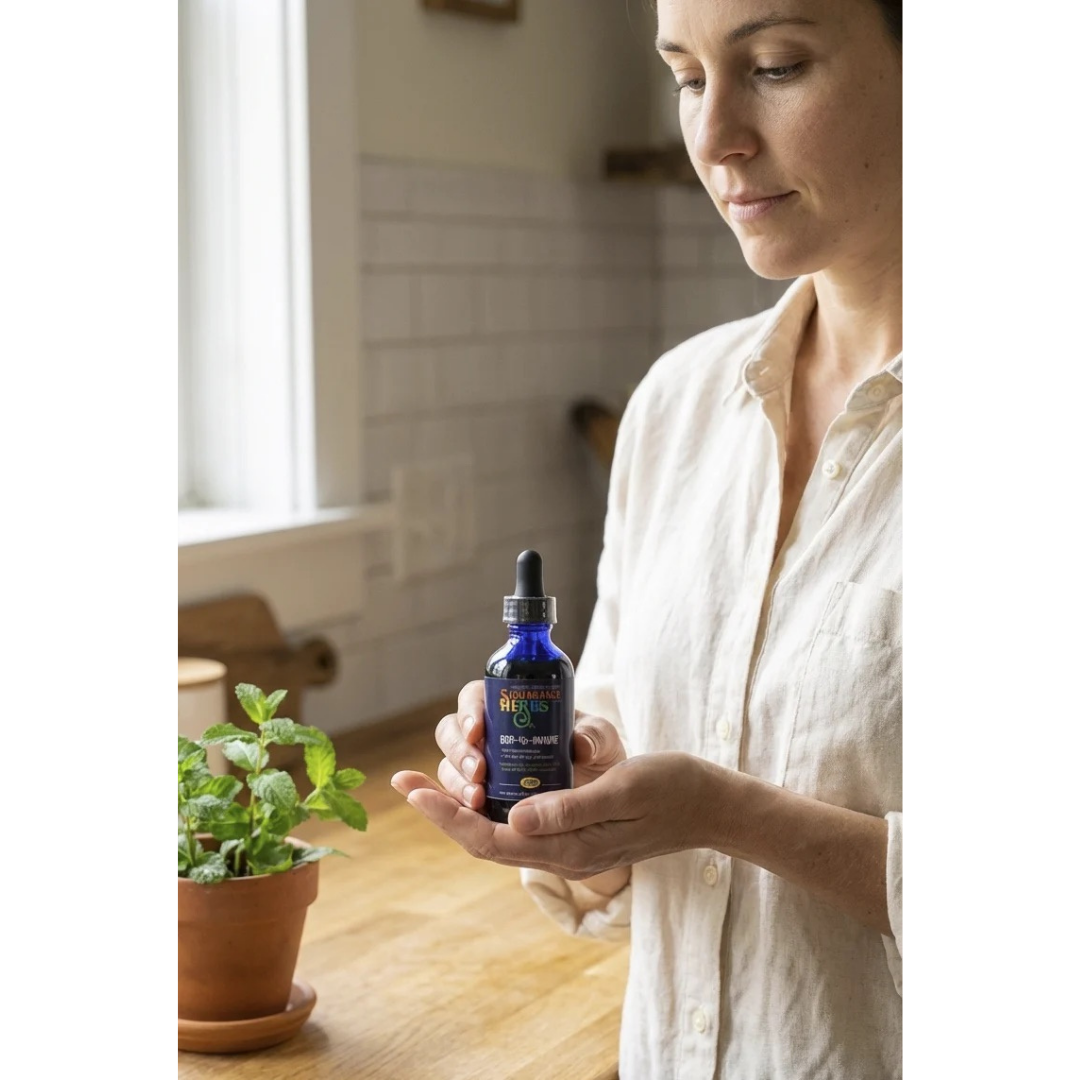
Sustenance Herbs Bor-L-Immune
A natural daily herbal tincture for tick season immune support in dogs and horses. Six organic and wildcrafted herbs (Japanese knotweed, cat's claw, astragalus, cryptolepis, andrographis, neem) hand-blended in small batches in Maine, where Lyme prevalence is among the highest in the country. NASC certified, gluten-free organic base.
The Gap Your Tick Routine Leaves
The bite that happened anyway, because your conventional preventative kills the tick after it bites, not before. The evening tick check that catches what is already attached, not what just climbed on. The dog who has already had one tick this season. Every tick-country household knows the gap their prevention routine leaves.
You have been doing it all. The topical or oral preventative you chose carefully after reading the labels and weighing the tradeoffs. The evening tick checks after every walk in the woods. The yard management, the boots-off ritual at the back door. You are the pet parent who reads the research and builds the routine. And you already know how the conventional preventatives actually work. They do not keep ticks off your dog. They do not stop the bite. They circulate in the bloodstream so the tick dies after feeding, which means the bite still happens and the transmission window still opens before the tick dies. Every tool in the standard routine works at the surface or after the bite. None of them prepare the body for what happens if a pathogen does get through anyway.
You see the pattern across the dogs that come through our door from tick country. The Lab who walks the same wooded trail every morning. The hunting dog who comes home from the field with two or three ticks at the end of a long weekend. The senior whose owner watches every springtime with quiet dread, knowing the conventional preventative does not stop the bite and the topical or natural spray does not catch every tick. The dog who has already had at least one tick this season, and the pet parent who is doing everything right but knows that "everything right" still leaves a gap. The realistic question in tick country is not which single tool will protect your dog from Lyme. It is what combination of layered defenses gives your dog the best chance, and what role natural herbal immune support plays inside that combination.
Sustenance Herbs is a small family-run herbal manufacturer in Kittery, Maine, where Lyme prevalence is among the highest in the country and herbal tick protocols have been developed and refined over years of community use. The formula combines six herbs that appear in traditional medicine systems across Asia, Africa, and the Americas, each with documented immune-supportive properties and modern in vitro research (laboratory studies performed on isolated bacteria or cells) on activity against the spirochete bacteria that cause Lyme (the corkscrew-shaped Borrelia microbes transmitted through tick bites). Japanese knotweed. Cat's claw. Astragalus. Cryptolepis. Andrographis. Neem. Together they form what many holistic practitioners recognize as a canine adaptation of the herbal Lyme protocol developed by the late Stephen Harrod Buhner for humans.
This is one tool in a layered tick-season defense, used by pet parents who read the research, work with their veterinarians, and understand that natural herbal protocols complement rather than replace conventional medicine. The recent reformulation to include cryptolepis, drawing on 2020 Johns Hopkins research that found this herb more effective than doxycycline in vitro against the bacteria that cause Lyme, brings the formula in line with the most current evidence in the holistic Lyme space. Bor-L-Immune is sold through holistic and integrative veterinary practices across New England and beyond, and carries a 97% five-star rating across 66 verified reviews on the manufacturer's site.
The Complete Tick-Country Toolkit
Bor-L-Immune is the only daily tool that prepares the body from the inside. Here is what tick-country households layer alongside it.
Holistic tick protection works in two layers. The external work that keeps ticks from finding and attaching to your dog. And the internal work that prepares the body to respond well if a tick gets through anyway. Bor-L-Immune is the internal layer, and no external tool below can do what it does. Each tool plays its own role in the daily routine, and the most successful households build the full layered toolkit rather than relying on any single piece.
Bor-L-Immune Daily Herbal Support · The Internal Layer
The only tool in the toolkit that works inside the body. Six organic and wildcrafted herbs prepare the immune system through tick season so the body has the resources to respond well to whatever a tick may transmit. The external tools below do excellent work at the surface, but none of them can prepare the body internally. Dosed daily by body weight, used by pet parents who understand that a complete defense needs both the external prevention and the internal preparation. Also suitable as complementary support for dogs with veterinarian-confirmed Lyme disease working through integrative protocols.
Daily Visual Tick Checks · The External Foundation
Run your hands through the coat after every outdoor outing in tick season, paying attention to ears, neck, armpits, groin, and between toes (the warm hidden areas where ticks attach). Borrelia transmission typically requires 24 to 48 hours of attached feeding, so removal within 24 hours dramatically reduces transmission risk. This is the most well-evidenced practice in the entire tick-prevention toolkit and the foundation everything else sits on.
Yard & Environmental Management · The Property Layer
Mow grass short, clear leaf litter, create a wood-chip or gravel barrier between lawn and wooded areas, and discourage deer and rodent traffic in the immediate yard. The CDC publishes detailed yard-management guidance for tick country households worth reading once and acting on once. Environmental tick density at home is the variable most pet parents underestimate.
Topical Tick Prevention · The Skin Surface Layer
Spot-on treatments, oral medications, or natural alternatives, depending on your tolerance for chemical exposure and your veterinarian's recommendation. Each option has tradeoffs, and the right choice depends on local tick density and your dog's individual sensitivities. Holistic pet parents commonly use lower-toxicity options layered with the natural tools below rather than the highest-strength chemical products alone.
Botanical Tick Sprays · The Natural Repellent Layer
Natural repellent sprays containing essential oils like cedarwood, geraniol, peppermint, lemon eucalyptus, or rose geranium applied to the coat before outdoor activity. Cedarwood oil in particular has documented research showing tick deterrent activity. Less effective than the strongest chemical repellents but useful for households reducing chemical load. Test on a small skin area first for sensitivity, and avoid use around cats in the household since several essential oils can be toxic to cats.
Baltic Amber Collars · The Passive Supplemental Layer
Raw Baltic amber collars are used in many European and holistic North American households as a passive supplemental layer. The traditional understanding is that the amber generates mild static electricity through friction with the coat and releases trace amounts of natural resin, both of which are thought to make the dog less hospitable to ticks. Clinical research is limited, but the collars have a long history in tick-country households and are widely used alongside the more active prevention tools.
Microfiber Tick-Wipe Cloths · The Physical Removal Layer
Wipe the dog's coat thoroughly with a microfiber cloth after every outdoor outing in tick season. The fine fibers physically catch unattached ticks before they can find a feeding spot, and the wipe doubles as a coat check for ticks already attached. Often missed in standard prevention conversations but practical and effective when used consistently. Pet parents in heavy tick country keep cloths near the back door for the after-walk routine.
Three Things This Formula Brings Together
Antimicrobial support, immune preparation, and the tissue coverage most antimicrobials cannot reach
Antimicrobial Support
Cryptolepis, andrographis, and neem contribute herbal antimicrobial activity studied against the specific bacteria and parasites involved in tick-borne illness. The 2020 Johns Hopkins cryptolepis research found activity against Borrelia burgdorferi (the Lyme bacteria) more effective in vitro than doxycycline against both active and dormant persister forms.
Immune Preparation
Astragalus and cat's claw build the immune system's deep reserves and modulate response patterns. Astragalus supports the body's natural killer cell capacity. Cat's claw tunes immune response without overstimulation, which matters because some immune supplements push the system in ways that backfire over time.
Tissue Coverage
Japanese knotweed delivers resveratrol that crosses the blood-brain barrier (the protective wall around the nervous system that filters most antimicrobials out). This matters because tick-borne pathogens can establish in neural tissue where conventional antibiotics struggle to reach.
What Bor-L-Immune Is Built For
Eight tick-season situations this formula is designed to support, from wooded trails to chronic Lyme complementary care
High-Tick-Density Regions
New England, Mid-Atlantic, Upper Midwest, Pacific Northwest, and other areas with documented Lyme prevalence
Hikers & Outdoor Active Dogs
Wooded trails, tall grass, woodland walks, and the dogs whose lifestyle puts them in tick habitat daily
Hunting & Sporting Dogs
Working dogs in the field whose tick exposure is structurally higher than the average household pet
Already Had A Tick This Season
For pet parents who want a second layer of herbal immune support after a known tick exposure
Layered Tick-Season Defense
For households building multi-tool strategies that combine environmental, topical, and herbal approaches
Buhner-Style Holistic Protocols
For pet parents working with integrative vets on the canine adaptation of the human Lyme herbal protocol
Multi-Animal Households
Dogs and horses sharing a property, where one tincture serves the whole multi-species tick-season toolkit
Chronic Lyme Complementary Support
For dogs with veterinarian-confirmed Lyme disease working on integrative herbal protocols alongside conventional treatment
The Full Formula
Six herbs from three continents, each with traditional history and modern research
The formula combines six herbs drawn from traditional medicine systems across Asia, Africa, and the Americas, each with documented immune-supportive properties and modern in vitro research on activity against the bacteria and parasites involved in tick-borne illness. Four ingredients are certified organic. Two are responsibly wildcrafted from their native habitats using methods that preserve parent plants for continued growth. The extraction base is distilled water and organic gluten-free grain alcohol.
Featured Ingredient
Cryptolepis (Cryptolepis sanguinolenta, Certified Organic Root)
Cryptolepis is a traditional West African herb used for centuries in Ghanaian medicine for fevers, infections, and malaria. In 2020, a Johns Hopkins University research team tested cryptolepis against Borrelia burgdorferi (the bacteria that cause Lyme disease) in laboratory conditions and found it more effective than doxycycline (the standard prescription antibiotic for Lyme disease) at clearing both active bacteria and persister forms (the dormant bacteria that hide from conventional antibiotics and are widely thought to drive chronic Lyme symptoms). The same research group has shown cryptolepis activity against Babesia, a protozoan parasite (a single-celled microbe larger than bacteria) that frequently co-infects dogs alongside Borrelia.
Cryptolepis is the most recent addition to the Bor-L-Immune formula, reflecting Sustenance Herbs' ongoing updates based on emerging research in the holistic Lyme community. The herb is now considered one of the most important herbal antimicrobials in tick-borne disease protocols, and its inclusion is the technical reason this formula sits above similar tinctures that have not been updated to include it.
Think of cryptolepis as the most recent generation of herbal antimicrobial. Newer research, broader spectrum, and active in laboratory studies against the specific bacteria and parasites that cause the most concern in tick-borne disease work.
A note on what the research shows and does not show. The Johns Hopkins study tested cryptolepis in laboratory conditions on isolated bacteria, not in living dogs or humans. In vitro results do not automatically translate to clinical efficacy. The herb has been used safely in traditional West African medicine for centuries, and Bor-L-Immune is formulated by holistic practitioners drawing on both the traditional history and the modern laboratory evidence. This is research-informed herbalism, not a replacement for veterinary treatment.
Featured Ingredient
Japanese Knotweed (Polygonum cuspidatum, Certified Organic Root)
Japanese knotweed is the central herb in Stephen Buhner's herbal Lyme protocol for humans and the anchor herb in this canine adaptation. The plant produces resveratrol, the antioxidant compound that made red wine famous, at concentrations far higher than any wine. Resveratrol crosses the blood-brain barrier (the protective wall around the nervous system that filters most substances out of the brain), which matters for tick-borne illness because the bacteria can establish in neurological tissue where most antimicrobials cannot reach.
In laboratory studies, resveratrol-rich Japanese knotweed extract has been shown to reduce the activity of Borrelia bacteria, including the persister forms that conventional antibiotics often miss. The plant has been used in Traditional Chinese Medicine for centuries for inflammation, immune modulation, and cardiovascular support. The root extract in this tincture is certified organic, which is meaningful for a plant in the same broad family as common food crops where conventional cultivation often involves synthetic pesticides.
Think of Japanese knotweed as the bridge between the bloodstream and the brain. Most immune-supportive compounds stop at the blood-brain barrier. Resveratrol crosses it, which is why this herb is the anchor of the Buhner protocol and the natural complement to the cryptolepis work happening in the rest of the body.
Why the Buhner protocol matters. The late Stephen Harrod Buhner spent decades developing herbal protocols for chronic Lyme disease in humans, drawing on traditional herbal medicine, modern laboratory research, and direct clinical work with patients who had not responded fully to conventional antibiotic treatment. His protocols are widely respected in the integrative medicine community and have been adapted for canine use by practitioners who treat Lyme-exposed dogs. Bor-L-Immune is one of several canine adaptations of that body of work.
Cat's Claw (Uncaria tomentosa, Responsibly Wildcrafted Bark)
Cat's claw is a vine from the Peruvian rainforest, used for thousands of years in traditional Amazonian medicine for immune support, joint inflammation, and infection. The bark contains pentacyclic oxindole alkaloids (the active immune-modulating plant compounds, often shortened to POAs in herbal literature), which modulate immune function and have shown activity against Borrelia in laboratory studies. Sustenance Herbs uses responsibly wildcrafted cat's claw, harvested from established plants in their natural rainforest habitat using methods that preserve the parent plant for continued growth.
The herb is respected in herbal Lyme protocols for its ability to support T-cell function (the immune cells that handle long-term defensive work) and overall immune response without overstimulating the immune system. This is a critical distinction in chronic immune work. Some immune supplements push the immune system upward in ways that backfire over time. Cat's claw modulates rather than amplifies.
Think of cat's claw as an immune system regulator. It does not push the immune system louder. It tunes the volume more precisely.
Astragalus (Astragalus membranaceus, Certified Organic Root)
Astragalus is one of the most well-known adaptogens (herbs that help the body adapt to physical and immune stress) in Traditional Chinese Medicine, used for over 2,000 years to support immune function, particularly the activity of natural killer cells and white blood cell production. The root contains polysaccharides and saponins (immune-active sugar and plant compounds) that enhance Th1 immune response (the arm of the immune system that clears infections from inside cells, including the spirochete bacteria that cause Lyme).
A transparent note on astragalus in chronic Lyme work. Stephen Buhner's later writings raised cautions about astragalus during active chronic Lyme infection, citing specific T-cell response patterns observed in some patients. The dosing in this formula is calibrated for tick-season preventive use rather than chronic-illness treatment, which is the most appropriate role for astragalus in the herbal toolbox. For dogs with diagnosed chronic Lyme disease, work with an integrative veterinarian on the question of whether astragalus continues to fit your specific protocol.
Think of astragalus as the immune system's deep reserve. It does not provide immediate defense. It builds the underlying capacity over weeks and months of daily use.
Andrographis (Andrographis paniculata, Responsibly Wildcrafted Aerial Parts)
Andrographis is a traditional Ayurvedic herb used for centuries in South Asian medicine for fevers, infections, and immune support. The plant contains andrographolides (the active compounds that give the herb its bitter taste and its medicinal action) with antimicrobial activity against spirochete bacteria and supportive effects on liver function. The herb appears in nearly every modern herbal Lyme protocol because of its dual action: antimicrobial work alongside protection of the organ doing most of the processing.
Andrographis has a strongly bitter character that some dogs initially resist. Mixed into food it becomes unnoticeable, and the bitterness itself is part of the traditional herbal mechanism, since bitter compounds stimulate digestive and liver function in ways that support the broader work this formula is doing.
Think of andrographis as the antimicrobial that protects the liver while it works. Most antimicrobial substances ask more of the liver. This one supports it.
Neem (Azadirachta indica, Certified Organic Leaf)
Neem is a tree native to the Indian subcontinent and used in Ayurvedic medicine for over 4,000 years. The leaf contains azadirachtin and related compounds with antiparasitic, antimicrobial, and immune-modulating properties. In the tick-borne disease context, neem contributes both antimicrobial support and a degree of systemic herbal exposure that some practitioners associate with a deterrent effect on biting insects.
Think of neem as the bitter green that traditional Indian medicine has been using for skin, parasites, and infection longer than written records exist. The bitterness is the active principle. The bitterness is what works.
Distilled Water and Organic Grain Alcohol (Gluten-Free Extraction Base)
The extraction base for this tincture is distilled water and organic gluten-free grain alcohol. Alcohol extraction preserves the alcohol-soluble plant compounds that water alone cannot pull from the plant material, which is why traditional herbalism has used alcohol tinctures for centuries. The alcohol content is low when the tincture is dosed at drop levels (1 drop per pound of body weight daily for a 50-pound dog is roughly 1.5 milliliters of tincture), and most of the alcohol evaporates when the drops mix into warm or room-temperature food.
For pet parents who want to reduce alcohol exposure further: drop the daily dose into a small amount of warm (not hot) water and let it sit for one minute before adding to food. The warmth evaporates most of the remaining alcohol while the herbal compounds stay in solution.
What This Looks Like Inside Your Dog's Body
Eight things happen between the first dose and the prepared immune system that pet parents in tick country are looking to build
Imagine a dog whose pet parent walks them through wooded trails, hikes in the warmer months, or simply lives in a rural area where ticks are part of the daily landscape. The dog has had at least one tick already this season. The pet parent has topical or oral prevention in place and does evening tick checks. They know the conventional preventative does not stop the bite, only kills the tick after it feeds. They know the evening check catches what is already attached, not what just climbed on. They want a second layer of defense that works inside the body, not just at the surface. Here is what changes once Bor-L-Immune is added to the daily routine through tick season.
The six herbs distribute through the bloodstream within an hour of dosing
The alcohol-extracted compounds reach circulation faster than capsule-bound powders would, distributing to the tissues where tick-borne pathogens establish.
Th1 immune response is supported through astragalus and andrographis activity
The arm of the immune system responsible for clearing infections from inside cells (including the spirochete bacteria that cause Lyme) gets daily reinforcement through the polysaccharides and immune-active compounds in these two herbs.
Resveratrol crosses the blood-brain barrier into neural tissue
The Japanese knotweed compound reaches the nervous system, where tick-borne pathogens can establish and where most antimicrobials cannot follow. This is the tissue coverage layer of the formula.
Cryptolepis exerts in-vitro-validated antimicrobial activity
The herb that demonstrated activity against both Borrelia and Babesia in the 2020 Johns Hopkins research distributes through the bloodstream and tissues, contributing the most current evidence-supported antimicrobial work in the formula.
Cat's claw modulates immune response so it stays balanced
The Amazonian vine bark fine-tunes the immune system rather than pushing it harder. The body stays responsive without tipping into the over-activation patterns that some immune protocols cause over time.
Neem provides systemic antiparasitic support
The Indian medicinal tree leaf contributes broader parasitic coverage to the formula, addressing the co-infections that frequently arrive alongside Borrelia when a tick transmits multiple pathogens at once.
The liver, supported by andrographis, processes the herbal compounds
Daily herbal protocols ask the liver to do real work. Andrographis is one of the few antimicrobial herbs that supports liver function while it works, which is why it appears in nearly every modern herbal Lyme protocol.
The body has the prepared resources to respond well to whatever comes
Tick exposure happens despite your best layered defenses. When it does, the immune system is not starting from baseline. The herbal preparation has been doing daily work for weeks or months, and the body is positioned to respond with capacity it would not have built on its own.
Important Notes Before Starting
Not for use in pregnant or breeding animals. Several herbs in this formula (particularly cat's claw and andrographis) have traditional cautions during pregnancy. Discontinue use 60 days prior to anticipated breeding and do not resume until weaning is complete.
Pause 7 to 10 days before surgery. Andrographis has mild blood-thinning effects that compound with omega-3 supplementation. Inform your veterinary team about all supplements before any scheduled procedure. Resume after veterinary clearance post-operatively.
Is This Right For Your Dog
Bor-L-Immune is especially worth considering if your dog...
Lives in a high-tick-density region (New England, Mid-Atlantic, Upper Midwest, Pacific Northwest, or anywhere with documented Lyme prevalence) where tick exposure is part of the daily landscape.
Has already had at least one tick this season and you want a second-layer holistic defense beyond topical prevention.
Goes on regular hikes, walks in tall grass, woodland trails, or hunts in tick country during the warmer months.
Is a sporting, hunting, working, or active outdoor dog whose tick exposure is structurally higher than the average household pet.
Has a holistic or integrative veterinarian who has discussed herbal tick-season protocols with you and supports adding Bor-L-Immune to your dog's routine.
Has previously tested positive or equivocal for Lyme exposure and you want a complementary natural protocol alongside whatever veterinary plan is in place.
Belongs to a household exploring natural alternatives or holistic complements to chemical tick prevention.
Is in tick season (typically spring through late fall in most US regions) with your usual prevention routine already in place.
Is on a Buhner-style approach recommended by an integrative vet for canine herbal tick support.
Shares a household with horses, since the formula is dosed across species for multi-animal protocols.
Is part of a multi-tool tick-season defense and you want a quality herbal layer rather than the cheapest blend on the holistic shelf.
Belongs to a label-reading, holistic-leaning pet parent who wants organic, wildcrafted herbal ingredients over synthetic veterinary supplements.
How To Give It
One drop per pound of body weight, daily through tick season
The standard prevention dose is 1 drop per pound of body weight once daily. If your veterinarian has confirmed Borrelia exposure or active infection in your dog, the manufacturer recommends doubling the dose to twice daily under veterinary supervision. The formula is suitable for dogs 10 pounds and larger only.
Weight-Based Dosing for Dogs
Mix into food or onto a small natural treat. The tincture has a strong, bitter herbal character (this is the herbs working as intended) and most dogs accept it mixed into food without resistance. For initial resistance, start at half the recommended dose for three to five days and ramp to the full dose once the dog has adjusted. The bitter character softens substantially when mixed with fatty or strongly flavored foods like wet food, raw food, or bone broth.
Timing: begin at first tick sighting. Start daily supplementation when ticks first appear in your area (typically late March in the Northeast, earlier in warmer regions) and continue throughout tick season. In most US regions tick season runs from late March through November, though milder winters have extended this in many areas. For dogs in year-round tick country (parts of the Southeast and California), discuss continuous use with your veterinarian.
Storage: shelf-stable at room temperature. Store at room temperature away from direct sunlight. Do not refrigerate; the alcohol-water base may cloud at refrigeration temperatures, which does not affect potency but changes the visual character of the tincture. The shelf-stable formula does not require refrigeration even after opening.
Works Well With
The natural partners that complete the tick-season toolkit
Bor-L-Immune is the herbal immune layer. Here is what stacks well on top of it for specific situations, in the order most pet parents tend to add them.
Lyme is one tick-borne disease, but ticks transmit several others (anaplasmosis, ehrlichiosis, babesiosis, Rocky Mountain spotted fever). Pet Alive's broader natural parasite formula provides spectrum support beyond Borrelia, which matters because most dogs with tick exposure encounter multiple potential pathogens rather than just one. Different mechanism, different targets, complementary use in the same tick-season toolkit.
ThorneVet Hepagen Liver Support
Long-term herbal protocols ask more of the liver than the average dog's diet supports. Hepagen combines milk thistle, dandelion, and schisandra for liver cell membrane integrity and regeneration. Particularly important when stacking Bor-L-Immune with conventional Lyme antibiotic treatment, since doxycycline is itself a liver-processed medication and the combined load on hepatic function (the liver's processing work) can be significant over multi-week courses.
Alice & Eli Green Lipped Mussel
For dogs with confirmed Lyme-related joint involvement or arthritis-pattern symptoms following tick exposure. New Zealand green-lipped mussel provides naturally occurring ETA omega-3 (a fatty acid unique to this mussel species), glycosaminoglycans (the structural sugars that build joint cartilage), and chondroitin sulfate that support joint comfort through completely different mechanisms than the immune work Bor-L-Immune is doing. Particularly useful for senior dogs and dogs whose Lyme presentation has been primarily orthopedic.
For dogs recovering from tick bite exposure, dogs finishing a course of conventional antibiotic treatment, or dogs with cumulative environmental toxin exposure. Super Cleanse combines burdock, milk thistle, dandelion, and other herbs for active detoxification work that supports the body's elimination pathways during and after the herbal protocol period.
Wholistic Pet Organics Ester C Immune Boost
Vitamin C amplifies the immune work the herbal blend is doing through a completely complementary natural mechanism. Ester C is the gentler buffered form that does not irritate sensitive digestive systems and is well tolerated alongside herbal tinctures. Particularly useful during peak tick season when the immune system has more cumulative work to do.
Frequently Asked Questions
The questions pet parents ask most
Is this a treatment or cure for Lyme disease?
No. This product is not approved by the FDA to diagnose, treat, cure, or prevent any disease, including Lyme disease, and we will not describe it that way. It is a daily herbal tincture formulated to support immune function during tick season. If your dog has been diagnosed with Lyme disease or any other tick-borne illness, work with your veterinarian on the appropriate treatment protocol. This product can be used as a complementary support alongside veterinary care, ideally under the guidance of an integrative or holistic veterinarian who understands herbal protocols.
How is this different from chemical tick prevention?
Topical chemical tick prevention (spot-on treatments, collars, oral medications) works by killing or repelling ticks before they can transmit disease. Bor-L-Immune does not repel ticks or kill them. It works internally to support the dog's immune system so the body has prepared resources to respond if a tick bite occurs. The two approaches are complementary rather than competitive. Most holistic pet parents who use Bor-L-Immune still use some form of topical tick prevention alongside it, particularly during peak tick exposure periods.
How is this different from other holistic Lyme support tinctures on the market?
The most significant differentiator is the inclusion of cryptolepis, the herb with the strongest recent research on activity against Borrelia and Babesia. Many older holistic tinctures predate the 2020 Johns Hopkins cryptolepis research and have not been reformulated to include it. Bor-L-Immune was recently updated specifically to add cryptolepis at a meaningful dose, which is the technical reason this formula sits above older Lyme-support blends on the holistic shelf.
Can I give this with antibiotics like doxycycline if my dog is on a Lyme treatment course?
Disclose all supplements to your prescribing veterinarian. There are no documented direct drug interactions between this herbal formula and doxycycline, and many integrative veterinarians actively recommend herbal immune support alongside antibiotic treatment for tick-borne disease. However, the decision should be made in partnership with the veterinarian managing your dog's specific case, ideally with input from a holistic practitioner familiar with herbal Lyme protocols.
How long should my dog stay on this product?
The manufacturer recommends use throughout tick season, which is typically late March through November in most US regions. For dogs in year-round tick country (parts of the Southeast and California), discuss continuous use with your integrative veterinarian. The adaptogenic and immune-supportive herbs in this formula are generally appropriate for long-term seasonal use under veterinary guidance, with periodic check-ins to assess whether the protocol continues to fit your dog's situation.
The Clean Formula Standard You Expect
For pet parents in tick country who want a research-supported natural herbal complement to their broader tick-season strategy, this is the formula that earns its place in the daily routine.
Lyme disease is real. The testing is imperfect. The conventional veterinary treatment works for many dogs and fails to fully resolve symptoms in others. The conventional preventatives do not stop the bite, only kill the tick after it has fed. Topical and natural prevention layered together are necessary but incomplete. The realistic question for pet parents in tick country is not which single tool will protect your dog. It is what combination of layered defenses gives your dog the best chance against tick-borne illness, and what role natural herbal support plays inside that combination. Sustenance Herbs has been formulating Bor-L-Immune to fill the herbal support layer in that combination, drawing on the Buhner protocol heritage and the most recent research on cryptolepis. Six organic and wildcrafted herbs. Hand-blended in small batches in Maine. NASC certified. Used by holistic and integrative veterinary practices across New England and beyond. Not a treatment, cure, or preventive for any tick-borne disease. One tool in a layered tick-season defense, the only one that does the internal immune work.
Six herbs from three continents. 1 drop per pound of body weight daily. Tick season long. Hand-blended in Maine.
Topical prevention keeps the ticks off. The herbs prepare the body for the ones that get through.