

Protect-A-Paw | Organic Healing + Protective Paw Balm
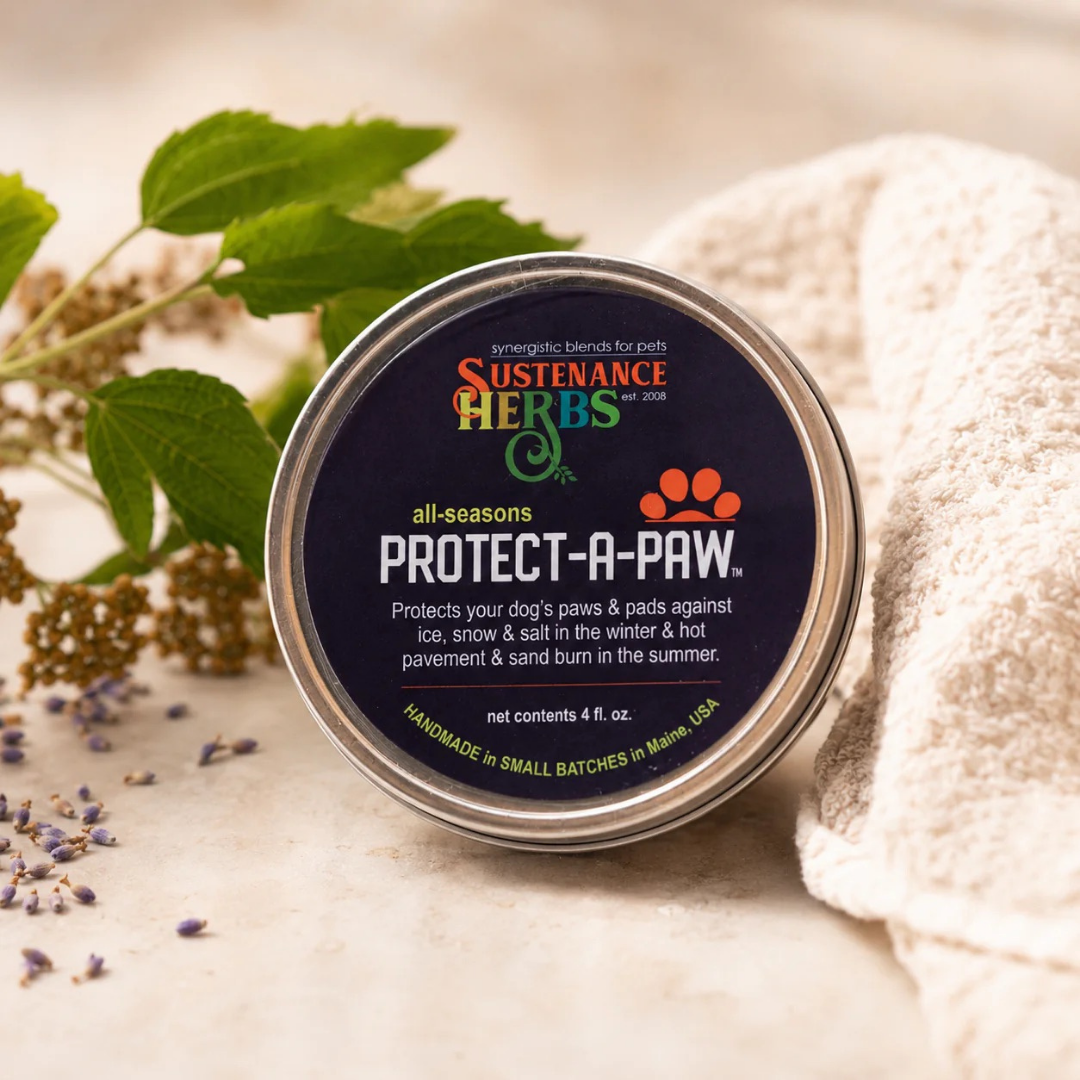
Sustenance Herbs · Protect-A-Paw · organic Petroleum-Free Balm
When Winter Salt Or Summer Pavement Is Hard On Your Dog's Paws, This Herbal Balm Protects And Helps Repair Them.
A natural, petroleum-free paw balm that pairs a breathable beeswax shield with four traditional skin herbs infused in olive oil. It protects pads from salt, cold, heat, and rough ground on the outside, while calendula, comfrey, and St. John's Wort soothe and help repair the skin underneath.
When Paws Need Protection And Repair
Paw pads take a beating, all year long.
Pads meet everything the ground offers: winter salt, summer pavement, gritty trails, and dry indoor air. When they get rough, cracked, or sore, a good balm both shields them and helps the skin recover. Here is when one earns a place by the door.
Winter salt and cold
De-icing salt and frozen ground dry and irritate pads, so a barrier helps on winter walks.
Hot summer pavement
A protective layer helps against warm, rough surfaces, though the shade-and-timing rules still apply.
Cracked or dry pads
Repair herbs work on the skin underneath to soothe and help mend rough, dry, cracked pads.
Rough trails and terrain
For hikers and trail dogs, a shield helps pads meet gravel, rock, and rugged ground.
You want a petroleum-free balm
You would rather not use petroleum jelly or mineral oil on the paws your dog will lick.
Why Holistic Households Reach For This
Protection on the outside, repair on the inside, in one application.
Most paw products do one job. A petroleum barrier seals, or an oil soothes. This one is built to do both. A breathable beeswax shield sits on top to seal out salt and moisture while still letting the skin breathe, and underneath it, four traditional, natural skin herbs infused in olive oil work to soothe and help repair the pad itself. Protection outside, repair inside, from one balm.
Why This Is A Topical-Only Balm
Six honest things a herbal paw balm does.
This one is meant to stay on the skin, not be eaten. A little incidental licking as a dog cleans a paw is generally tolerated, but the balm is designed for the pads, so it is worth discouraging heavy licking. Here is what it does, in plain terms.
A breathable beeswax shield protects
Beeswax forms a petroleum-free barrier that seals out salt and moisture while still letting the skin breathe, unlike an occlusive petroleum layer.
Four skin herbs work underneath
Calendula, chickweed, comfrey, and St. John's Wort, some of the best-regarded skin herbs in the Western tradition, are infused in olive oil to soothe and help repair the pad.
Neem adds a protective botanical touch
A touch of neem, a traditional protective plant oil, rounds out the formula, part of what helps the balm guard rough, exposed pads.
Rosemary and lavender, in small amounts
Small amounts of rosemary and lavender essential oil add antioxidant and calming qualities. Rosemary is worth a caution for seizure-prone dogs, covered plainly below, and a rosemary-free option exists for them.
It is petroleum-free and clean
No petroleum jelly, no mineral oil, no synthetic waxes. Nothing borrowed from the petrochemical shelf, which is the whole point for a paw a dog will lick.
It protects and soothes, it does not treat
This shields and helps repair everyday rough pads. A deep cut, a burn, a severe crack, or a limping dog needs your vet, not a balm.
Why this paw balm over the rest? It does two jobs at once, the honest way. A breathable, petroleum-free shield outside and a real blend of repair herbs inside, with the essential oils kept small and a clear caution for the dogs who should skip the rosemary. For a hiker, a winter walker, or a household avoiding petroleum on a lickable paw, that combination is the appeal.
What this is: a petroleum-free herbal balm that protects paw pads and helps repair the skin underneath. What this is not: a treatment for a deep wound, a burn, or a limping dog. It shields and soothes everyday rough pads, and anything serious belongs with your veterinarian.
Protect-A-Paw is more than a winter barrier. Its calendula, comfrey, and St. John's Wort blend protects, soothes, and helps repair paw pads in every season.
The Most Important Thing To Know
It protects and helps repair, from one balm.
Two jobs, one application. A breathable beeswax shield seals out salt and moisture on the outside, while four skin herbs infused in olive oil soothe and help repair the pad underneath.
It is natural and petroleum-free. No petroleum jelly, mineral oil, or synthetic waxes, which matters for a paw that gets licked. It is a topical-only balm, so heavy licking is worth discouraging.
What Each Ingredient Actually Does
A short, honest formula in three parts.
Repair herbs, a protective shield, and a small aromatic touch. Here is what each part brings, in measured terms.
Four Skin Herbs Infused In Olive Oil
Calendula, Chickweed, Comfrey, St. John's Wort
Four of the oldest and best-regarded skin herbs in the Western tradition, infused into extra virgin olive oil and chosen for soothing irritation and helping the skin repair. Comfrey in particular is a classic external skin herb, which is one more reason this balm is made to stay on the pad rather than be eaten.
The Petroleum-Free Shield
Certified Organic Beeswax
Beeswax forms the protective barrier, a petroleum-free combination that seals out salt and moisture while still letting the skin breathe. No mineral oil, no synthetic waxes, nothing borrowed from the petrochemical shelf.
Neem And A Touch Of Essential Oils
Neem, With Rosemary And Lavender, In Small Amounts
A touch of neem, a traditional protective plant oil, rounds out the formula. Small amounts of rosemary and lavender essential oil add antioxidant and calming, soothing qualities. One honest caution: rosemary essential oil is best avoided for seizure-prone dogs, so those dogs should use a rosemary-free option, covered in full below.
Why this short formula is enough
A paw balm does not need a long list to work. A protective shield, a blend of proven repair herbs, and a small aromatic touch cover both jobs: guarding the pad and helping the skin underneath recover. Clean, petroleum-free, and made to be simple, which is the point.
What To Look For
How to choose a paw balm worth using.
Paw balms range from petroleum jelly to thoughtful herbal blends. Four things separate a good one from the rest. Here is what to look for, and how this balm measures up on each.
Petroleum-free and breathable
A paw a dog licks should not be coated in petroleum. Look for a breathable, petroleum-free shield.
Beeswax shield, no petroleum
Real repair herbs, not just wax
A shield alone only protects. Look for soothing skin herbs to help the pad recover too.
Calendula, comfrey, and more
Honest about any essential oils
If a balm uses essential oils, look for one that keeps them small and tells you who should skip them.
A clear seizure-dog caution
Clean, quality ingredients
Skip the mineral oil and synthetic waxes. Look for organic, food-grade ingredients you recognize.
Organic olive oil and beeswax
Worth Reaching For If Your Dog
Made for the paws that meet the roughest ground.
Walks on winter salt and ice
A barrier before walks helps guard pads from de-icing salt and frozen ground.
Faces hot or rough pavement
A protective layer helps against warm, gritty surfaces, alongside walking in the cooler hours.
Has dry or cracked pads
The repair herbs soothe and help mend rough, dry, or lightly cracked pads over time.
Hikes or runs rough terrain
For trail dogs, a shield helps pads meet gravel, rock, and rugged ground on longer outings.
Needs everyday pad care, alongside your vet for anything serious
For routine protection and the upkeep of rough, dry pads in any season. A deep cut, burn, severe crack, or limp needs your veterinarian, not a balm.
Is This Right For Your Dog?
This belongs by your door if these fit.
Walks on winter salt, ice, or hot summer pavement
Has rough, dry, or lightly cracked pads that need repair support
Hikes, runs, or covers rough terrain
Belongs to a home that wants a petroleum-free, clean balm
Has no seizure history that makes the rosemary a reason to choose a rosemary-free option instead
How To Apply: Use Guidance
Apply, rub in, and let it do its work.
Scoop a small amount, apply it to the pads, and rub it in. Then keep your dog occupied for a few minutes so it can absorb, discouraging heavy licking while it settles.
Basic application. Rub a thin layer into clean, dry pads. A little goes a long way. A short walk or a chew afterward helps keep a dog from licking while it absorbs.
By season. Apply before walks in winter to guard against salt and cold, and after outings in summer to soothe pads from warm ground. Use as often as rough pads call for it.
Beyond the pads. The same balm can help a dry, rough nose. Keep it to external use, and store it closed in a cool place so it stays firm.
Works Well With
Paw care pairs with a whole-dog routine.
Terra Wipes
Wipe paws clean after a walk before applying balm, so the shield goes on fresh pads rather than over salt and grit.
ProActive Paws Roe Mega DHA EPA
Healthy skin starts within. This omega-3 supports skin and coat from the inside while the balm protects the pads on the outside.
Animal Essentials Seasonal Allergy Soft Chews
For dogs whose paws get itchy and irritated in allergy season, these chews support a normal seasonal response from within.
Questions And Answers
Everything you want to know before you buy.
What is the best paw balm for dogs?
The best natural paw balm both protects and helps repair, using a breathable, petroleum-free shield over real skin herbs. This one pairs a beeswax barrier with calendula, chickweed, comfrey, and St. John's Wort for exactly that dual job.
How do I protect my dog's paws in winter?
Apply a protective balm before walks to guard against salt and cold, wipe the paws when you get home, and keep walks shorter in extreme cold. A breathable beeswax shield helps without trapping moisture.
Does my dog need paw balm?
Not every dog does. Those who walk on salt, ice, or hot pavement, hike rough terrain, or have dry, cracked pads benefit most. If your dog's pads stay smooth and comfortable, you may not need one often.
Are paw balms safe if my dog licks them?
This is a topical-only balm, so a little incidental licking is generally tolerated, but heavy licking is worth discouraging. Rub it in and keep your dog busy while it absorbs. Choose petroleum-free balms for lickable paws, and mind the rosemary caution for seizure-prone dogs.
How to heal cracked dog paw pads?
Keep the pads clean, protect them from further roughness, and apply a soothing repair balm regularly to support the skin. Deep cracks, bleeding, or a limping dog need your vet, since those go beyond everyday dryness.
What protects dog paws from hot pavement?
The best protection is timing and shade: walk in the cooler hours and test the pavement with your hand. A protective balm adds a layer of defense, but it does not make scorching pavement safe, so use good judgment first.
Is calendula safe for dogs?
Calendula is one of the most gentle and well-regarded natural skin herbs for dogs, long used to soothe and support the skin topically. Applied externally in a balm like this, it is a safe, traditional choice.
What is comfrey used for in paw balm?
Comfrey is a classic external skin herb, traditionally valued for soothing and helping the skin repair. It is used topically, not internally, which is one reason this balm is made to stay on the pad rather than be eaten.
Natural balm for dry dog paws?
A natural balm with olive-oil-infused skin herbs and a beeswax shield is well suited to dry paws, soothing the skin naturally while protecting it from further drying. Apply regularly to rough, dry pads to help them recover.
How often should I apply paw balm?
Apply as often as the pads call for it: before or after walks in harsh conditions, and daily for very dry or cracked pads until they improve. Once pads are comfortable, an occasional application keeps them that way.
Is it safe for dogs with seizures?
This version contains a small amount of rosemary essential oil, which is best avoided for seizure-prone dogs. For a dog with a seizure history, choose a rosemary-free option and check with your vet first.
Can I use this on my dog's nose?
Yes, a small amount can help a dry, rough nose too. Keep it to external use and apply thinly, discouraging licking while it absorbs, just as you would on the pads.
Is there petroleum or mineral oil in it?
No. It is petroleum-free, with a beeswax shield and olive-oil-infused herbs. There is no petroleum jelly, no mineral oil, and no synthetic wax.
Can people use it too?
The clean, simple ingredients mean many people use a dab on dry hands, cuticles, or rough spots. As with your dog, keep it to external use, and skip the rosemary version if that is a concern for you.
The Clean Formula Standard You Expect
Protection and repair, in one clean balm.
Winter salt, summer pavement, and rough trails are hard on pads. This petroleum-free balm shields them with breathable beeswax and helps repair the skin underneath with four traditional herbs, honest about the rosemary caution and about what a balm cannot do.
Petroleum-free beeswax shield · Calendula, chickweed, comfrey, St. John's Wort · Neem and a small aromatic touch · Protects and helps repair, every season
Winter walkers. Trail dogs. Cracked, dry pads. This is natural paw care done the clean, honest way, protecting on the outside and helping repair on the inside, honest about who should skip the rosemary.
Protect-A-Paw is more than a winter barrier. Its calendula, comfrey, and St. John's Wort blend protects, soothes, and helps repair paw pads in every season.